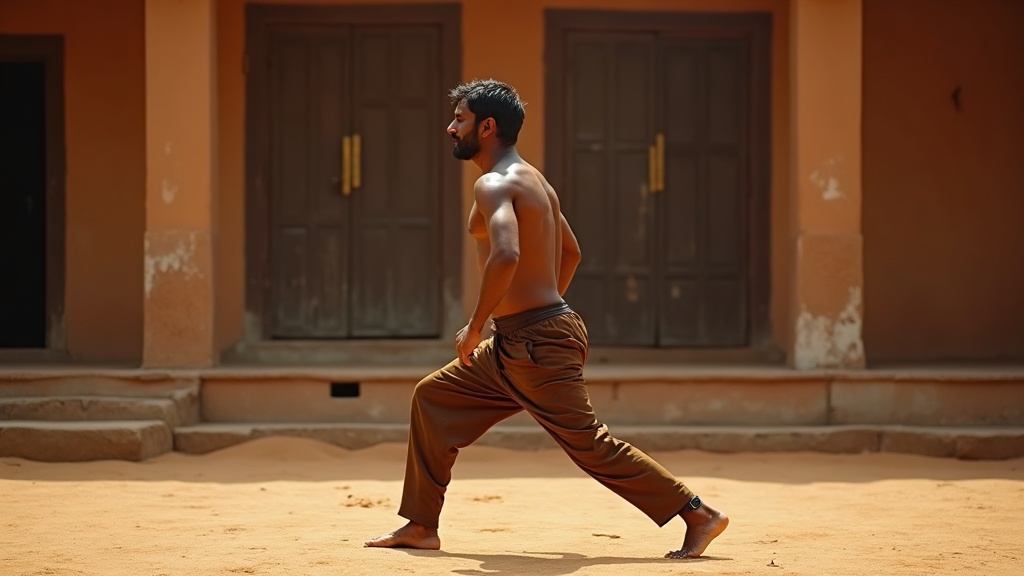
Somatic Movement Practice — A Guide to Feeling Your Body
Somatic Movement Practice — A Guide to Feeling Your Body
Last updated: 27 May 2026
Most articles about somatic movement are written for people who barely move. This one is written for the opposite reader. You already train — gym, yoga, martial arts, climbing, running, something — probably for years. You are not unfit. You are not undisciplined. And still, the same sentence keeps surfacing whenever you leave a session honestly: the work happened, but it did not land. The body moved. You watched it move. You did not quite live inside it while it did.
That gap — between performing a movement and inhabiting it — is the precise territory a somatic movement practice covers. This guide defines somatic movement operationally rather than poetically, names the three inner senses it actually trains, walks through the recognised practices in the category, makes the case for traditional martial movement as a legitimate somatic practice, and gives you a concrete daily starter you can run today. By the end you will know what to do, what to feel for, and how long it takes before something measurable shifts.
A somatic movement practice is any structured movement performed with attention on internal sensation — what the body feels — rather than on how the movement looks from the outside. It trains three inner senses in parallel: proprioception (where your body is in space), interoception (what is happening inside it), and felt sense (the body's pre-verbal read on what something means). Recognised practices include Feldenkrais, Hanna Somatics, yoga, tai chi, qigong, and — less commonly named — traditional martial movement such as Kalaripayattu.
Key Takeaways
- A somatic movement practice is any movement done with attention turned inward to sensation, rather than outward to performance or shape.
- It trains three inner senses simultaneously: proprioception, interoception, and felt sense — together these form what most articles vaguely call "mind-body connection."
- The defining mechanism is slowness, not relaxation: slow movement leaves time for the inside of the body to catch up with the outside.
- Recognised somatic practices include Feldenkrais, Hanna Somatics, yoga, tai chi, qigong, Pilates, dance, and the traditional martial movement of arts such as Kalaripayattu.
- Most people feel a first concrete shift within two to three weeks of short daily practice — typically tension release first, balance and breath rhythm later.
- A daily five-minute starter built around a slow weight-shift with eyes closed at the halfway point is enough to begin training all three inner senses at once.
- A somatic movement practice does not replace your other training — it usually deepens it by closing the awareness gap performance training leaves open.
What a Somatic Movement Practice Actually Is
The term "somatic movement" gets used loosely, which is part of why it feels slippery when you first encounter it. Most pieces define it as "mind-body connection" or "moving with awareness," then leave the words undefined. That is poetry, not a working definition. To make the term usable, it needs to be unpacked into the parts a body actually trains.
A simple working definition
A somatic movement practice is any movement system in which the felt sense of the body from the inside is the primary object of attention, and the external shape of the movement is secondary. The word somatic comes from the Greek soma, the body as lived from within, and was popularised in this sense by Thomas Hanna in the 1970s.
The distinction matters because most movement training inverts the priority. In a gym, the shape (how the squat looks) is primary; the felt sense (how the squat feels) is, at best, a means to clean up the shape. In a somatic practice, the felt sense is the point — the shape is whatever the body happens to make while attention is parked inside it.
This is why the same movement, done differently, can be either somatic or not. A slow weight-shift done with attention on the soles of the feet, the breath, and the micro-adjustments of the spine is a somatic practice. The same slow weight-shift done while watching yourself in a mirror and correcting form is not. Same movement. Different practice.
Why "mind-body connection" is too vague to use
"Mind-body connection" is the phrase nearly every introductory article uses. It is also the phrase nearly every reader skims past, because it does not point at anything specific you could feel, train, or measure.
There is no single mind-body connection. There are three distinct internal senses that performance training tends to neglect, all measurable in research settings and all trainable in practice. Once you name them separately, the practice becomes concrete: you can ask which sense a given movement is training, and what kind of attention develops which sense. The vague phrase dissolves into something you can work with.
The three inner senses a somatic practice trains
These three senses are the operational meat of any somatic movement practice. Every recognised method — Feldenkrais, Hanna Somatics, yoga, tai chi, Kalaripayattu — works on them in some combination.
Proprioception is your sense of where your body is in space without looking. Sensors in muscles, tendons and joint capsules feed your brain a real-time map of joint position. Close your eyes and touch your nose with your index finger — the system that just guided your hand is proprioception. The Cleveland Clinic describes it as the body's spatial GPS. Most martial arts and most strength training already build it to varying degrees, because spatial accuracy is part of any reasonable technique.
Interoception is a different sense entirely: the perception of your internal state. Heart rate, breath rhythm, hunger, fatigue, the small tensions and releases happening inside you while you read this sentence. Researchers describe it as the foundation of self-awareness and emotional regulation — you cannot manage what you cannot feel, and most of what needs managing is happening inside the body. This is the sense most performance training skips entirely.
Felt sense is the third — the term comes from Eugene Gendlin's work on Focusing in the 1960s. It is the body's pre-verbal read on what a situation, a movement, or an experience means — felt as a quality (tight, open, weighted, hollow) before any words arrive. It is not a feeling in the emotional sense and not a thought; it is the body's own knowing, accessed through attention rather than analysis.
A complete somatic movement practice trains all three at once, in motion. That is the operational definition. Everything that follows in this guide rests on it.
How a Somatic Movement Practice Works in the Body
Once you accept the three-senses definition, the next question is mechanical: how does slow attentive movement actually develop those senses? The answer is not mysterious. It rests on three structural features that show up across every recognised somatic method.
Slowness as the unlock — not as a constraint
Fast movement is hard to feel from the inside. If a punch happens in 300 milliseconds, the time available to notice the small things — the breath catching, the hip not loading evenly, the shoulder climbing — is too short for awareness to register. The practitioner sees the outcome (it landed, it missed) but does not get a window into the cause.
Slow movement opens the window. A movement performed over thirty seconds rather than three has a hundred times more sensory bandwidth available to attention. The micro-adjustments of the spine, the shift of weight under each foot, the precise moment the breath wants to come in — all of it becomes legible.
This is why every somatic method, from Feldenkrais to tai chi to the early stages of Kalaripayattu, treats slowness as central. Slowness is not a beginner concession. It is the mechanism. Fast practice has its own value, but it is not what builds interoceptive resolution.
What the nervous system is actually doing
Slow attentive movement also changes the state of the autonomic nervous system. Long exhales, held positions, and unhurried transitions all activate the parasympathetic branch — the rest-and-digest mode that most modern adults spend too little time in.
A 2018 review of slow movement and breathing practices documents consistent shifts in heart rate variability, vagal tone, and stress-response markers across yoga, tai chi and related practices. The body responds physiologically to the architecture of the practice, regardless of whether the practitioner believes in anything.
For the reader who already trains hard, this is the missing input. Most strength and conditioning work pushes the sympathetic nervous system — the alarm system. Without a counterweight, that system stays partially engaged even at rest. A somatic practice provides the counterweight by spending sustained time in the opposite mode.
Breath as feedback, not as technique
Most breathwork advice treats breath as a technique to perform: inhale four, hold four, exhale eight, repeat. That is one valid approach. A somatic movement practice treats breath differently — as continuous feedback about whether attention has actually landed in the body.
When attention drifts, the breath tightens. When attention returns, the breath softens. You do not have to control either. You only have to notice. Over time the channel becomes finer, and you start to catch the breath catching before the rest of the body has even registered the distraction. That kind of breath awareness is the most reliable internal cue any practitioner has — sharper than thought, faster than emotion.
This is also why every serious somatic method puts breath at the centre. Not as a discipline. As an instrument.
What Counts as a Somatic Movement Practice
Once the working definition is in place, it becomes much easier to look at the field and sort it. Some practices are explicitly somatic by design. Others develop the same three senses without using the word. Both belong.
The recognised list
Most public articles about somatic movement name the same set: yoga, tai chi, qigong, Pilates, dance, the Feldenkrais Method, and Hanna Somatics. The Cleveland Clinic includes aikido in its overview. These all qualify because their training architecture matches the criteria: attention inside the body, slow movement, breath-led sequencing.
A few methods deserve naming because they were built explicitly as somatic systems rather than evolving into the category. Hanna Somatics formalised pandiculation — a slow voluntary contract-and-release sequence that retrains chronically tight muscles. The Feldenkrais Method, developed by Moshé Feldenkrais, works through small differentiated movements that expand the brain's map of itself. Body-Mind Centering, developed by Bonnie Bainbridge Cohen, works through embodied exploration of anatomical structures.
The list is wider than the public usually realises, and the boundaries are not as crisp as the websites suggest. The question to ask of any practice is the operational one: does it train the three inner senses through slow attentive movement? If yes, it qualifies, regardless of its branding.
Why traditional martial movement belongs on the list
This is the wedge that most public articles miss. The Cleveland Clinic includes tai chi and aikido as somatic. The same article does not mention any of the Indian martial arts, and most articles on the wider SERP follow the same pattern.
The omission is historical, not structural. Tai chi entered the Western somatic conversation because it was visible to American somatic teachers in the 1970s and 80s, the same decades somatic experiencing and Feldenkrais were being formalised. The Indian martial traditions were not visible in those circles, so they did not get folded in. The training architecture, however, fits the criteria as cleanly as any other tradition on the list.
The pattern repeats across systems. Silat from the Malay archipelago, the slow drills of certain Chinese internal arts, the somatically-aware portions of aikido — all qualify by the same definition. The category of "somatic movement" is wider than the publishing record suggests, because the wider category was never the product of a single tradition.
The specific case of Kalaripayattu
Kalaripayattu is the traditional martial art of Kerala, with documented roots in the Sangam period (3rd century BCE to 4th century CE). The practice opens with a stage called meithari — body conditioning through low stances and animal-form sequences — followed by kolthari (sticks), ankathari (sharp weapons) and verumkai (empty-hand). Body comes first by design. Weapons come only after the body is prepared.
What makes the early stages somatic is not the marketing — there is no marketing — but the architecture. The low stances cannot be held without continuous interoceptive monitoring of weight distribution and breath. The slow weight-shift sequences cannot be performed without proprioceptive attention to joint position. The animal-form work (meypayattu) coordinates breath, gaze, weight and gesture in patterns that depend on felt sense to lead and the limbs to follow.
The result is that a body conditioned through several months of meithari has trained all three inner senses simultaneously — without the practitioner ever encountering the word "somatic." This is the case I make to students who come to the practice through the somatic door rather than the martial one. The category they have been searching for is already present in the tradition. It is just named differently.
For the reader who already trains and still does not land, the martial side is often easier to enter than yoga or Feldenkrais, because the demand is recognisable. A man who finds Feldenkrais "too gentle" or yoga "too soft" will often stay in a low Kalaripayattu stance for ten minutes and discover that gentle was never the missing variable. Demand was.
Somatic movement vs somatic therapy — clearing the confusion
This distinction trips up readers more often than any other. Somatic movement and somatic therapy share a word but do different work.
Somatic therapy — most commonly Somatic Experiencing developed by Peter Levine — is a clinical modality, usually delivered one-on-one in a therapeutic setting, aimed at resolving stored trauma in the nervous system. It is a treatment.
A somatic movement practice is a training. It develops the three inner senses through repeated, structured movement. The effects can overlap — both work with the nervous system, both can produce regulation — but the contexts and intentions are different. A somatic movement practice is something you do most days for years. Somatic therapy is something you do with a qualified practitioner when there is something specific to work through.
Confusing the two leads to disappointment in both directions. People come to a movement class expecting trauma resolution and find a practice. People come to somatic therapy expecting exercise and find a clinical conversation about the body. Both are valid. Neither is the other.
How to Start a Daily Somatic Movement Practice
Definition and theory aside, the only thing that develops these three inner senses is repeated practice. A daily somatic movement practice does not need to be long. It needs to be consistent and attentive.
One concrete five-minute starter
This is the starter I give to students who want to begin a somatic movement practice at home before deciding which method to commit to. It trains all three inner senses in five minutes, with no equipment, in any room with floor space the size of a bath mat.
- Stand barefoot, feet hip-width apart, knees soft. Take three slow breaths through the nose. Do not adjust posture. Just notice what your feet are doing with the floor.
- Slow weight-shift: over the count of twenty, shift your weight entirely onto your right foot. The left foot stays on the floor but takes no weight. Then shift back over twenty counts. Repeat twice, eyes open.
- Add the eyes closed: same slow weight-shift, eyes closed. Notice what changes — usually the speed has to slow further, and the small adjustments of the ankles and hips become loud. Repeat twice each side.
- Add the breath: same shift, eyes closed, with the inhale carrying the weight one way and the exhale carrying it back. The breath becomes the metronome. Twice each side.
- Stand still for thirty seconds at the end. Notice the difference in how the floor reads from your feet now compared with the beginning.
Five minutes. Done daily, this single sequence will train proprioception, interoception, and felt sense in parallel. It is not impressive to watch. That is the point.
What to notice while you do it
The most common beginner mistake is to focus on getting the movement right. There is nothing to get right in the sequence above. What is being trained is your attention to what is already happening — the small ankle corrections, the tiny breath pauses, the place where weight actually sits versus where you think it sits.
Watch for the following. Where on your foot does the weight actually land — toward the heel, the ball, the outside arch? Does it stay there or drift? When you close your eyes, what happens to the breath? Does the body brace? Where does it brace? Can you let the brace go without losing balance? These questions are the practice. Their answers will change daily, and that changing is itself the signal that the inner senses are coming back online.
How often, how long
For a beginner, five minutes daily for the first three weeks outperforms twenty minutes twice a week. Frequency builds the neural map faster than duration. Once the daily habit is in, you can lengthen sessions to fifteen or twenty minutes as the body asks for more.
This is consistent with what the Harvard Health editorial team reports as the general guidance across somatic methods: short daily sessions, not long occasional ones. The point is to keep the inner-senses channel active. Skipping days lets it dim.
Three weeks in, you will know whether the practice is changing anything in you. If it is — and for most people who actually do the daily five minutes, it is — you are ready to choose a method to commit to.
Practising at home vs with a teacher
For the first weeks, home practice is enough. The five-minute starter requires no supervision. You will not injure yourself doing a slow weight-shift with eyes closed.
After three to six weeks, most practitioners benefit from at least some teacher time. A teacher catches the things attention has not yet caught — the held shoulder you stopped noticing because you have always held it, the breath pattern that protects rather than releases, the asymmetry the body has compensated around for years. None of these are visible from inside until someone points them out.
The choice of method is then a choice about what kind of body you want to build. Feldenkrais builds extraordinary subtlety and is excellent for chronic pain. Yoga builds breath and flexibility. Tai chi builds slow rooted movement and is exceptionally well documented in clinical research. Traditional martial somatic practice — Kalaripayattu among them — builds demand-tolerant attention, a body that can carry weight and breath and stillness at once.
If your training history is heavy and you want a practice that meets that intensity rather than apologises for it, the Kalaripayattu pathway for beginners is the most direct entry into the somatic side of a tradition built on the body first.
What You Will Actually Feel — A Realistic Timeline
Most somatic articles refuse to give a timeline because results vary. That is true and also unhelpful. The following markers are the ones I see consistently across students of the daily five-minute starter, scaled by the kind of practice they later commit to. Individual variation is wide, but the order of the markers is reliable.
Week one and two — tension release and ground contact
The first thing most people notice is not a new sensation but the absence of an old one. Some tension that had been there long enough to become invisible — a held shoulder, a clenched jaw, a hip that never quite settled into the chair — softens during or just after the practice. Often the noticing happens in shower or at the desk, not during the practice itself.
The second early marker is felt-sense ground contact. You start to feel where your weight actually sits in your feet. This is also one of the most reliable early markers across yoga and martial arts traditions. The contact becomes specific: front of the foot, outside arch, the small adjustments the ankle is making to keep you upright. You did not feel any of this two weeks ago.
Week three to six — balance, joint awareness, breath rhythm
By the third week the proprioceptive map starts to update visibly. Balance improves in ways that show up off the mat — you stop having to grab the wall to put on socks, your stride evens out, you stand on one leg without thinking about it. The brain is rebuilding the resolution of the spatial map it had let drift.
Joint awareness sharpens at the same time. You feel the hip socket as a socket rather than a vague area. You feel the knee as a hinge, not a point. The shoulder unlocks in directions you had stopped using. These are not new ranges; they are old ranges the brain had forgotten it could ask for.
Breath rhythm settles in this period too. Baseline breath becomes slightly slower, slightly deeper, and the gap between inhale and exhale lengthens without effort. This is the parasympathetic shift the research literature describes — it is not subtle, and it does not require you to chase it.
Month two onward — moving from felt sense rather than from thought
The deeper shift, the one that takes the longest, is qualitative rather than quantitative. The practice stops feeling like an instruction you carry out and starts feeling like something the body does while attention watches. The movements become led by the felt sense — the body knows where to go, the mind merely keeps it company.
Practitioners often describe this as the moment when their other training transforms too. The same lift becomes felt. The same yoga sequence becomes interior. The same run becomes a conversation with the body rather than a project performed on it. Nothing about the other training has changed. The attention with which it is done has.
This is the marker that most often holds people in the practice for years. It is also the hardest to put into words for someone who has not yet felt it — which is why every honest somatic teacher eventually shrugs and says: try the five-minute starter for three weeks and decide for yourself.
Common Mistakes in a Somatic Movement Practice
The mistakes below are the ones that come up most often with students new to somatic work. They are predictable. They are also fixable, once named.
Trying to "feel more" by thinking harder
The first mistake is the most common. You stand in the weight-shift, you close your eyes, and you find yourself narrating: the weight is moving, I should feel the arch, am I feeling the arch, that might be the arch. That is thinking, not feeling. The narration is the brain doing what the brain does when interoception has been on standby for years: it fills the gap with words.
The fix is not to try to feel more. The fix is to soften the narration and let whatever is actually arriving arrive. Some days that will be a lot. Some days almost nothing. Both are the practice. Forcing the sensation manufactures the sensation, which trains the wrong channel.
For the reader who is always in their head when training, this is the central trap. The way out is not better thinking. It is less of it.
Treating it like another workout
The second mistake is to bring performance thinking to the practice. You set a goal — I will feel my arches by Friday — and you measure your sessions against the goal. The goal-setting forces the very channel the practice is trying to relax.
A somatic movement practice has no targets. The session is what happens. The honest report is whatever you noticed. That is the entire metric. If the practice is going well, the inner-senses map is updating, whether or not you can articulate what just happened in your feet.
Quitting before the nervous system has caught up
The third mistake is a timeline error. Many people try the practice for four or five days, feel nothing dramatic, and decide it does not work for them. The first concrete shift usually arrives between day ten and day twenty. Quitting at day six is quitting just before the window opens.
The nervous system needs daily input to start trusting that this new mode of attention is here to stay. Once the trust is in — usually around week two — the changes start to compound. Before then, nothing visible may be happening on the surface even though the groundwork is being laid.
Confusing relaxation with embodiment
The fourth mistake is to mistake the parasympathetic side-effect for the practice itself. Yes, a somatic movement practice usually calms you. It also sharpens awareness, increases attention to discomfort, and makes you more able to feel what you have been numbing. That second set is not always pleasant. Real embodiment is not synonymous with relaxation; it is synonymous with feeling, which sometimes feels good and sometimes does not.
A practice that only relaxes you is a relaxation practice. A practice that develops your ability to feel — even when what arrives is tension or grief or boredom — is a somatic one. The difference matters because the second one keeps working when the first one has plateaued.
Frequently Asked Questions About Somatic Movement Practice
What is somatic movement practice in simple terms
A somatic movement practice is any movement done with attention on what the body feels from the inside, rather than on how it looks from the outside. The word somatic comes from the Greek soma, meaning the body as lived from within. Recognised practices include Feldenkrais, Hanna Somatics, yoga, tai chi, qigong and certain traditional martial systems. The defining feature is internal attention, not the specific movements involved.
How is somatic movement different from yoga
Yoga is one form of somatic movement, not a separate category — most styles of yoga qualify by the working definition. The wider category of somatic movement includes practices that are not yoga, such as Feldenkrais, Hanna Somatics, and tai chi. The reverse is also true: not every yoga class is somatic in practice. A fast power-yoga class focused on shape and sequence can train very little interoception if attention stays external. Whether yoga is somatic depends on how it is done, not on the label.
How long does it take for somatic movement to actually work
The first concrete shift usually arrives between day ten and day twenty of daily practice, even with sessions as short as five minutes. The earliest markers are tension release and felt ground contact. Balance and breath shifts follow in week three to six. Deeper changes — the body leading and the mind following — typically land in month two. Quitting in the first week is the most common mistake.
Can I practise somatic movement at home
Yes — and home is in fact where most somatic practice happens. The five-minute starter described in this guide requires no equipment and no supervision. After three to six weeks of consistent home practice, most practitioners benefit from at least some teacher time to catch the things attention has not yet caught. The teacher is an accelerator, not a prerequisite.
How often should you practise somatic movement
Short and daily beats long and occasional. For a beginner, five minutes every day for three weeks will produce more change than twenty minutes twice a week for the same period. The nervous system updates through repetition, not duration. Once the daily habit is established, sessions can lengthen naturally as the body asks for more.
Is somatic movement the same as somatic therapy
No. Somatic therapy — most commonly Somatic Experiencing developed by Peter Levine — is a clinical modality, delivered one-on-one, aimed at trauma resolution. A somatic movement practice is a training that develops the three inner senses through repeated structured movement. The effects can overlap, but the contexts are different: therapy treats, practice trains. People sometimes use both, in parallel.
Are martial arts a somatic practice
Some are. Slow internal arts such as tai chi and qigong are explicitly somatic and appear on most published lists. Aikido is named by the Cleveland Clinic in this category. Traditional Indian martial arts such as Kalaripayattu qualify by the same working definition, because their early stages train all three inner senses through slow weight-loaded movement. Faster reactive arts such as boxing or kickboxing train proprioception heavily but interoception only incidentally — they are partly somatic at best.
Who should not do somatic movement
The five-minute starter described in this guide is safe for almost everyone, including older adults and people with most musculoskeletal limitations, because it is slow, ground-based and load-free. Anyone with severe balance issues, vertigo, or specific medical conditions should clear it with their doctor first. Pregnant women can practise but may need modifications. Somatic movement is not a substitute for clinical treatment of any condition.
What is the difference between proprioception and interoception
Proprioception is your sense of where your body is in space — joint position, limb location, balance — without looking. Interoception is your sense of what is happening inside your body — heart rate, breath, hunger, tension, fatigue. Both are trainable senses, both are central to a somatic movement practice, and most performance training builds proprioception while skipping interoception. A complete somatic practice trains both at once.
Is somatic movement good for men who already train hard
Yes, and this group often benefits most. Men who have trained gym, yoga or martial arts for years usually have strong proprioception but weak interoception — the I keep training but nothing is landing pattern. A somatic practice closes the gap by training the missing channel. The 7-day Kalaripayattu foundations course is built specifically for this profile, and the broader case for embodiment training for men is covered in a dedicated guide.
Does somatic movement help with stress and sleep
Indirectly. The slow movement and long exhales used across somatic methods activate the parasympathetic branch of the autonomic nervous system. Documented effects include shifts in heart rate variability and vagal tone, both of which correlate with stress regulation and sleep quality. These are not medical treatments and do not replace clinical care for diagnosed conditions, but the carry-over into baseline calm and sleep onset is consistent across long-term practitioners.
What if I do not feel anything during the practice
Most people do not feel much for the first three to seven days. This is not a sign the practice is failing. The interoceptive channel has been on standby for years; it takes consistent input before the signal becomes legible. Stay with the daily five minutes for three weeks before deciding. If you still feel nothing after three weeks of honest daily practice, working briefly with a teacher will usually surface what attention alone has not yet caught.
Sources & Further Reading
- Cleveland Clinic — What Are Somatic Workouts? — Editorial overview of the category and the recognised practice list.
- Harvard Health — What are somatic workouts? — Editorial guide with a 2025 study citation and one in-bed exercise example.
- Cleveland Clinic — Proprioception — Definition and mechanisms of the spatial-position sense.
- NIH / PMC — Interoception research review — Peer-reviewed background on interoception as the foundation of self-awareness.
- NIH / PMC — Slow breathing and parasympathetic activation — Documented physiological effects of slow movement and breathing practices.
- Somatics — Wikipedia — Origin of the term and the field, popularised by Thomas Hanna.
- Feldenkrais Method — Wikipedia — Background on one of the most rigorously developed somatic methods.
- Body-Mind Centering — Wikipedia — Bonnie Bainbridge Cohen's approach to embodied anatomical exploration.
- Kalaripayattu — Wikipedia — Background on the traditional Kerala martial art and its four training stages.
- Indian martial arts — Wikipedia — Wider context for the Indian martial traditions discussed in the somatic-extension section.
- Somatic Experiencing — Wikipedia — Reference for the clinical somatic therapy modality distinguished from somatic movement.
Conclusion — Where to Start
A somatic movement practice is not a new fitness category. It is the older, quieter side of every movement tradition that has ever taken the body seriously. The Western publishing record has fenced the term around a small set of named methods. The underlying definition — movement done with attention to what the body feels from the inside, training proprioception, interoception and felt sense together — is much wider, and the traditional martial side of the field belongs in it.
For you, the question is not which method has the best brand. It is which one will actually meet the body you arrive with. If you are a beginner mover, Feldenkrais and gentle yoga are excellent starting points. If you have trained hard for years and still feel outside yourself, a practice that meets your intensity will land deeper than one that apologises for it.
If you keep training but nothing is landing: the 7-day course is built for exactly that. Seven days, one foundational Kalaripayattu movement per day, all of them designed around the three inner senses this guide unpacks. You will feel the difference by day three.
Start the 7-day Kalaripayattu foundations course — €24.90 →
(If the 7-day course page is not yet live: the first lesson of the full Level 1 curriculum is free — no payment, no commitment. Create your account and start today →)
About the Author
Raphael Gorschlüter — Co-Founder & Head Teacher, Kalari University
Raphael Gorschlüter is the co-founder of Kalari University and one of Europe's most experienced Kalaripayattu teachers. He has trained and taught the practice for over twelve years, with regular work in Germany, Spain and India — including the annual Tiruvannamalai retreat. His teaching focus is the somatic side of the tradition: developing the ability to feel movement rather than only perform it. He writes from inside the practice. Everything in this guide has come out of teaching students who already trained but did not yet land — not from theorising about embodiment from the outside.
→ More about Raphael and Kalari University
