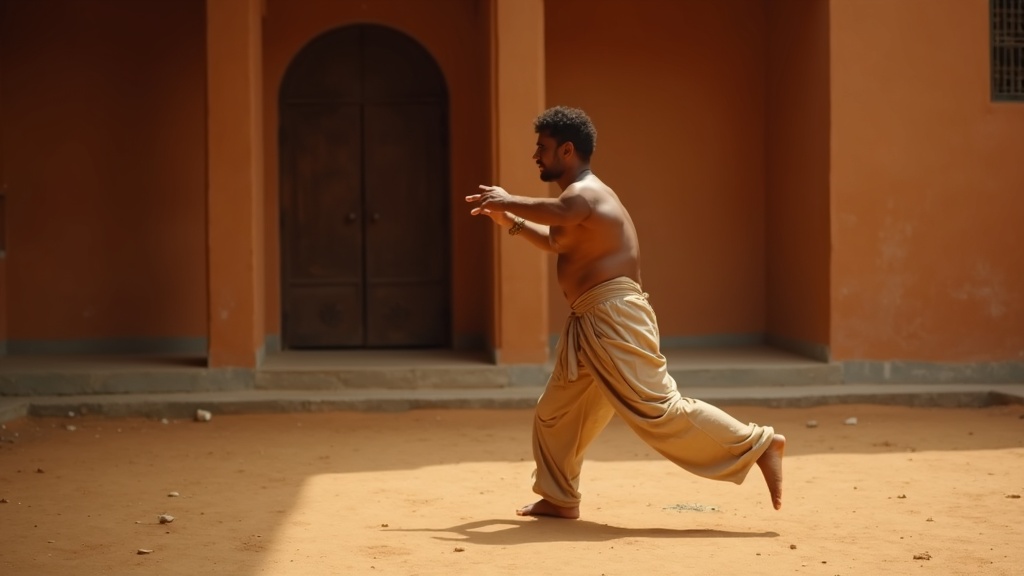
Somatic Movement Therapy — What It Is and Who Needs It
Somatic Movement Therapy — What It Is and Who Needs It
Last updated: 27 May 2026
Most articles about somatic movement therapy are written by therapists, for people sitting in front of a search bar at 11pm wondering whether something is wrong with them. The framing slides quickly toward trauma, dysregulation, and the case for booking a session. That is one valid context — and for some readers, the right one. But it is not the only context, and treating it as the only one leaves a much larger group of readers confused about whether they actually need therapy or whether they need something quieter, daily, and unsupervised.
This guide separates the two cleanly. Somatic movement therapy is a clinical intervention delivered by a trained practitioner, time-limited, usually in a one-to-one container, and pointed at a problem. Somatic movement practice is a daily training of the same inner senses, ongoing, self-led, and pointed at capacity rather than at a diagnosis. They overlap in mechanism. They differ in container, intent, scope, and price. People who confuse the two either book a therapist they did not need or skip the therapist they did need.
By the end of this guide you will know what somatic movement therapy actually is, what it treats, what it does not treat, what a session looks like, what it costs, how long it takes, and — most importantly — whether your situation is one a therapist should hold or one a practice can address.
Somatic movement therapy is a clinical body-based modality in which a trained practitioner uses movement, posture, breath, and felt-sense tracking to help a client release stored stress patterns and re-regulate the autonomic nervous system. Sessions are typically one-to-one, time-limited, and pointed at a specific concern such as trauma, chronic tension, or anxiety. It is distinct from a daily somatic movement practice, which is unsupervised training of the same inner senses for capacity-building rather than for problem-solving.
Key Takeaways
- Somatic movement therapy is a clinical modality delivered one-to-one by a trained practitioner, while a somatic movement practice is daily self-led training of the same inner senses.
- The most widely recognised forms include Somatic Experiencing (Peter Levine), Sensorimotor Psychotherapy, Hakomi, and movement-based methods such as the Feldenkrais Method and Body-Mind Centering.
- Therapy is the right container for trauma, chronic dysregulation, freeze responses, or symptoms that talk therapy has not resolved.
- A practice is the right container for the much larger group whose issue is not pathological — they simply train without feeling the body, or move through the day disconnected from sensation.
- A typical session lasts 50 to 75 minutes and costs USD 100–250 in the United States or GBP 60–150 in the UK; most clients do 6–20 sessions before significant change is reported.
- Insurance coverage is rare and inconsistent in the UK and most of Europe; in the US, some plans reimburse when a licensed psychotherapist delivers it under a mental-health diagnosis.
- Somatic movement therapy is not a fit for active psychosis, severe dissociative disorders without a stable therapeutic relationship already in place, or as a primary treatment for medical conditions that require medical care.
- Traditional movement systems such as Kalaripayattu often produce effects that overlap with somatic therapy outcomes — but they are practices, not therapies, and should not be marketed or used as substitutes for clinical care.
What Somatic Movement Therapy Actually Is
The term sits at a crossroads of three older fields — body psychotherapy, somatic education, and trauma research — and inherits language from all three. That makes it slippery on first encounter. The cleanest way in is to build the definition from its working parts.
A clinical, body-based intervention
Somatic movement therapy is a form of body psychotherapy in which the therapist works with the client's nervous system, posture, breath, and movement patterns as the primary material — rather than with thought, narrative, or behaviour as in classical talk therapy. The underlying claim is that experiences which the body did not finish processing remain stored as patterns of muscular holding, breath restriction, and autonomic activation, and that working with these patterns directly is often more effective than working with the cognitive layer above them.
This claim is grounded in two bodies of work. Peter Levine's Somatic Experiencing, developed from his observation of how wild animals discharge survival energy without becoming traumatised, gave the field a clinical method for tracking and releasing stored activation. Bessel van der Kolk's work, particularly The Body Keeps the Score, gave it the mainstream language and the neurobiological frame that most modern somatic therapists now operate within. Van der Kolk's research at the Trauma Center at Boston University was instrumental in making the case that trauma lives in physiology, not in narrative.
What it is not
It is not massage. It is not bodywork in the structural-integration or Rolfing sense, though those fields share some vocabulary. It is not a fitness class with a wellness label. It is not the same thing as somatic exercises you find on YouTube — those are practice tools, not therapy. And, importantly, it is not a substitute for medical treatment when medical treatment is what the situation calls for.
The clearest way to think about it: somatic movement therapy is to body psychotherapy what cognitive behavioural therapy is to talk psychotherapy — a specific clinical approach within a broader category, delivered by a trained practitioner in a defined container, pointed at change.
The recognised modalities
The field is not a single brand. The recognised modalities most commonly referred to as somatic movement therapy include:
- Somatic Experiencing (SE) — developed by Peter Levine, the most widely taught somatic therapy approach for trauma, focused on tracking and titrating activation in the nervous system.
- Sensorimotor Psychotherapy — developed by Pat Ogden, integrates movement and posture work with attachment and trauma frames.
- Hakomi Method — developed by Ron Kurtz in the 1970s, uses mindful body awareness within a therapeutic relationship to surface implicit beliefs.
- The Feldenkrais Method — developed by Moshé Feldenkrais, uses small differentiated movements to expand the brain's map of itself; classified as somatic education more than therapy, though often delivered in a therapeutic frame.
- Body-Mind Centering — developed by Bonnie Bainbridge Cohen, explores anatomical systems through embodied attention.
- Dance/Movement Therapy (DMT) — uses choreographed and improvised movement within a psychotherapeutic frame; recognised as a mental-health profession in the US through the American Dance Therapy Association.
- Somatic Movement Education and Therapy as defined by the International Somatic Movement Education and Therapy Association (ISMETA) — the field's professional body, which certifies practitioners across many of the above schools.
All of these share a working premise: that movement done with internal attention, inside a therapeutic relationship, changes things that words alone often do not.
How Somatic Movement Therapy Differs from a Somatic Movement Practice
This is the distinction the rest of the SERP rarely draws cleanly. Without it, every reader is funnelled toward booking a therapist regardless of what their situation actually calls for. With it, the picture becomes much more honest — and most readers turn out to need something different from what they thought.
A daily somatic movement practice is the broader, older, quieter side of the field. A clinical somatic movement therapy session is the narrower, newer, more specific side. Both are real. They serve different needs.
Container
Therapy happens in a session with a practitioner. There is an appointment, a clinical container, a fee, and a relational frame that does much of the therapeutic work itself. A practice happens on your bedroom floor at 06:45 before you make coffee. There is no appointment, no practitioner, and no relational frame — just you, the ground, and the time you have set aside.
Intent
Therapy is pointed at a problem. The reason someone books a somatic therapist is almost always specific: a trauma that talk therapy did not resolve, a chronic anxiety pattern, a freeze response that keeps reappearing under stress, a body that will not let down its guard. A practice is pointed at capacity. You are not trying to fix anything; you are building a baseline ability — the ability to feel the body from the inside while it moves, which is something most adult bodies have lost.
Scope
Therapy is time-limited. Most clients work with a somatic therapist for between six and twenty sessions before significant shift is reported, sometimes longer for complex trauma, sometimes much shorter for a specific reactive pattern. A practice is open-ended. You are training a perceptual capacity that does not have an endpoint, much the way physical training does not have one.
Cost
Therapy in the UK runs roughly GBP 60 to GBP 150 per session; in the US, USD 100 to USD 250. Over a course of treatment that is a real financial commitment. A practice is free if you do it on your own floor; even a structured introductory course in any tradition rarely costs more than the price of a couple of therapy sessions.
Direction of attention
Both work with internal attention — that is the shared ground. But the therapist directs the attention based on what the nervous system is doing in the room; the practitioner of a practice directs their own attention based on a structured form (a stance, a sequence, a breath count). One is responsive. The other is structured. Both train similar territory by different routes.
Who each is for
Therapy is for the reader whose situation needs holding by a trained practitioner — trauma, dysregulation, freeze, chronic activation that has not yielded to other approaches. A practice is for the much larger group whose situation is not pathological — they train but do not feel, they move through the day disconnected from sensation, they want to close the gap between performing a movement and inhabiting it.
A useful rule of thumb: if you are not sure whether something is wrong, a practice is the safer first step and will often surface whether therapy is also needed. If something is clearly wrong — a trauma is intruding, a freeze is recurring, a state is stuck — go to the therapist first, and bring a practice in afterwards as the maintenance container.
What Happens in a Somatic Movement Therapy Session
For the reader who is considering booking, the unknown of the session itself is often the hardest part. There is no single template — the field is too varied — but the architecture is broadly similar across the recognised modalities.
Intake and orientation
The first session usually opens with a longer conversation than subsequent ones — the therapist will ask about what brings you in, what you have already tried, your history with body-based work, and any medical or psychiatric considerations. Some therapists will ask you to fill in a brief form before arriving. The conversation is not the work; it is the map the therapist will use to track the work in subsequent sessions.
Many practitioners will also explicitly set what is sometimes called a "container" — a brief agreement about what kind of intervention you are signing up for, what the boundaries of the work are, and what they will and will not do.
The session itself
A typical session lasts 50 to 75 minutes. After a brief check-in, the practitioner will often invite you to notice what is present in the body right now — a kind of internal scan. From there, the work proceeds along the lines specific to the modality:
- In Somatic Experiencing, the therapist tracks micro-shifts in your nervous system as you bring attention to small "edges" of activation — gradually titrating between activation and resource, helping the system discharge stored survival energy in small, manageable doses.
- In Sensorimotor Psychotherapy, the focus is often on posture, gesture, and movement impulses that arise as you describe a memory or sensation — the therapist works with these as gateways to material the cognitive layer has not been able to reach.
- In Hakomi, the therapist uses small bodily experiments — pressure, posture, gentle touch — to surface implicit beliefs the body has been holding.
- In Feldenkrais "Functional Integration" (the one-to-one delivery), the practitioner guides you through small, slow movements while you lie on a low table, with a focus on expanding the brain's movement map.
- In Dance/Movement Therapy, sessions often include both stillness and structured or improvised movement, depending on what is present.
Throughout, the practitioner will ask you to report what you notice — what do you feel in the chest now?, what happens to the breath when you move that way? — and adjust the work accordingly. Sessions usually close with a settling phase: a few minutes of quieter work to integrate before you leave.
What you might feel during and after
Some sessions are quiet. Others bring up strong sensations — heat, trembling, tears, sudden ease, deep tiredness. Some clients leave feeling lighter; some leave feeling stirred and need time to settle. Most practitioners advise scheduling sessions on days when you do not need to perform high-stakes work immediately afterwards, particularly in the early weeks.
A skilled practitioner is trained to titrate the work — to keep the system inside what trauma research calls the "window of tolerance," the band where activation can be processed rather than overwhelm. If a session brings you outside that band, that is information for the practitioner to slow down, not a sign that the work is failing.
What Somatic Movement Therapy Helps With — and What It Does Not
This is the section the clinical pages tend to oversell and the skeptical pages tend to undersell. Both extremes mislead the reader. The honest answer is that the field has a defined scope, supported by a growing — though still partial — research base.
What the evidence currently supports
The strongest evidence base is for the use of somatic approaches in trauma and post-traumatic stress. A 2017 randomised controlled trial of Somatic Experiencing for PTSD published in the Journal of Traumatic Stress found significant reductions in PTSD symptoms and depression compared to a wait-list control. A growing body of work documents shifts in autonomic regulation — heart rate variability, vagal tone, cortisol — following somatic interventions, with the NIH-indexed literature on slow movement and breathing providing the physiological backbone.
Bessel van der Kolk's research on yoga as adjunctive treatment for chronic PTSD — published in the Journal of Clinical Psychiatry — gave the field one of its earliest peer-reviewed footholds for movement-based intervention with traumatised populations.
Practitioners and clients report — with varying degrees of empirical support — meaningful changes in:
- post-traumatic stress symptoms, including hyperarousal and intrusive memories
- chronic anxiety and panic patterns with a strong somatic component
- chronic tension and pain that has not responded to physiotherapy alone (where the underlying driver is autonomic, not structural)
- freeze and dissociative responses under stress
- difficulty feeling emotions or distinguishing physical from emotional states
- the broad category of "stuck" sensations that talk therapy alone has not shifted
The Cleveland Clinic and Harvard Health both treat somatic work as a legitimate area of intervention, while noting that the research base is still maturing relative to longer-established psychotherapies.
What it does not treat
Somatic movement therapy is not a primary treatment for:
- diagnosed medical conditions — diabetes, cardiovascular disease, neurological disorders, autoimmune disease. These require medical care; somatic work may be a useful adjunct, never a replacement.
- active psychosis, untreated severe depression, or acute suicidality. These need psychiatric care and risk assessment first.
- severe dissociative disorders, in the absence of a stable existing therapeutic relationship. Body-based work can deepen dissociation when the relational container is not yet strong enough to hold it.
- substance use disorders as a standalone intervention. It may support recovery alongside specialist treatment.
A practitioner who claims somatic movement therapy can cure cancer, reverse diabetes, or replace your medication is not a practitioner you want to work with.
What it is not designed for
For most readers — and this matters — somatic movement therapy is not designed for the I keep training but nothing is landing problem. That problem is real, common, and worth addressing. But it is a perceptual training gap, not a clinical condition. The right container for it is a daily practice, not a course of therapy. Booking a therapist for a problem a practice would solve is expensive, slow, and pointed at the wrong tier of intervention.
For that reader, the route in is a body awareness movement practice, built around slow daily movement that trains the three inner senses — and the conversation about how to actually feel your body when you train is much more useful than a therapy intake form.
The Polyvagal Frame and Why It Matters
Most modern somatic therapists work with some version of polyvagal theory, developed by Stephen Porges. The theory has been challenged on parts of its neuroanatomical detail in academic literature, but the clinical model it provides has been widely useful as a working map of nervous-system states. For a reader trying to understand why body-based work makes sense as an intervention, the model is worth a brief walk-through.
Three states, not two
The traditional model of the autonomic nervous system gave us two states: sympathetic (fight-or-flight) and parasympathetic (rest-and-digest). Polyvagal theory adds a third by splitting the parasympathetic branch into two — ventral vagal (social engagement, calm-and-connected) and dorsal vagal (shutdown, freeze, collapse).
In the polyvagal frame:
- Ventral vagal is the state of safe connection — settled body, free breath, present attention.
- Sympathetic is mobilised — heart rate up, attention narrowed, body ready to act.
- Dorsal vagal is collapse — heart rate down, attention foggy, body shutting down to conserve energy.
A nervous system that can move fluidly between these states as the situation calls for is what the theory calls "regulated." A system that gets stuck in one of them — chronically sympathetic, or chronically dorsal — is what the theory calls "dysregulated."
Why this matters for movement therapy
Movement, posture, and breath are some of the most direct levers we have on the autonomic state. A long exhale, a slow weight-shift, a held floor-supported posture — each of these speaks to the autonomic nervous system in a language it understands. This is the physiological basis on which somatic movement therapy rests. The therapist works with the client to help the system find its way back toward the ventral vagal state, and to build the flexibility to leave it appropriately and return.
This is also why slow, attentive movement — whether in a therapy session or in a daily practice — tends to produce overlapping effects. The same lever is being used. The difference is who is holding it.
For the reader who wants to dig deeper into how this lever works without booking a therapist, the grounding through movement guide treats the same physiological territory from the practice side.
Where Traditional Movement Systems Fit In
This is the section the rest of the SERP does not write, and it matters for any reader trying to understand the wider field. Long before "somatic" became a category in the Western therapeutic vocabulary, several older movement traditions had developed practices that work on the same physiological levers. Tai chi, qigong, certain styles of yoga, and traditional Indian martial arts such as Kalaripayattu all train the autonomic nervous system through slow, attentive, breath-led movement.
The overlap with somatic outcomes
Practitioners of these traditions consistently report — and research is gradually documenting — many of the same outcomes that somatic movement therapy aims at: reduced baseline activation, sharper interoceptive awareness, deeper sleep, easier breath, the felt-sense capacity to notice what is happening inside the body. The mechanism is the same one polyvagal theory describes: sustained time in the ventral vagal state, mediated by the architecture of the practice itself.
This is not a coincidence. Traditional movement systems were built, over many generations, by people who paid extremely close attention to what reliably produced certain felt and functional states in the body. They did not have the vocabulary of vagal tone or interoception, but they had something arguably more important — the empirical knowledge of which practices, done with which attention, reliably produced which results.
Why a practice is not a therapy
The important honesty here: traditional movement practices are not therapies. They are not delivered in a one-to-one clinical container, they are not licensed, they are not bound by the ethical and scope-of-practice obligations that govern a therapist. A practice does not screen you. A practice does not titrate the work to your nervous system in the way a skilled somatic practitioner does. A practice is open-ended, structured, and self-led.
What a practice often does — and this is the honest claim — is produce many of the same downstream effects therapy aims at, at a fraction of the cost and time, for the much larger group of readers whose situation is not clinical to begin with. The body that has spent years training without feeling, the man who keeps moving but does not land, the practitioner who has done yoga for a decade and still feels somewhere outside himself — these are not therapy cases. They are practice cases. The article on embodiment training for men goes deeper into one specific version of this profile.
Kalaripayattu as a worked example
Kalaripayattu, the traditional martial art of Kerala in southern India, illustrates this clearly. In twelve years of teaching the practice, I have watched students arrive with the exact symptom profile that has them considering a somatic therapist — they cannot feel their body, they live in their head, their training does not land, they describe themselves as "always wound up." Most of them do not need a therapist. They need three months of daily slow practice, on the floor, with the breath, with attention on what the body is actually doing. The four-stage progression of Kalaripayattu — body conditioning first, weapons only after — was built around exactly this kind of slow somatic re-integration. The practice predates the vocabulary by two thousand years. The article on what Kalaripayattu actually is covers the tradition itself in detail, and the marma therapy guide addresses the healing side of the same lineage.
This is the case for the practice route. It is not the case against therapy. For the reader whose situation is clinical, the therapist is the right call. For the reader whose situation is perceptual, the practice is.
How to Choose Between Therapy and Practice
The most useful question this guide can leave you with is the one most articles in this space avoid: how do you decide?
Markers that suggest therapy is the right container
- You have identifiable trauma — single event or chronic — that is intruding on your daily life through flashbacks, nightmares, or strong physiological reactions to reminders.
- You experience freeze, shutdown, or dissociation under stress and these responses are creating problems in work, relationships, or basic functioning.
- You have done substantial talk therapy and feel that the cognitive understanding is in place but the body has not changed.
- You experience chronic anxiety, panic, or autonomic dysregulation that has not responded to other treatments and that has a strong somatic component (chronic chest tightness, breath restriction, gut symptoms in the absence of medical explanation).
- A medical or mental-health professional has suggested somatic work as part of your care.
In any of these cases, the right call is a trained somatic practitioner. Look for someone with formal training in one of the established modalities — Somatic Experiencing, Sensorimotor Psychotherapy, Hakomi, or a registered somatic movement therapist through ISMETA. For the trauma-specific routes, the Somatic Experiencing International directory is the cleanest place to start.
Markers that suggest a practice is the right container
- You train regularly but feel disconnected from the body during training.
- You experience tension, restlessness, or general dysregulation but cannot point at a specific trauma or clinical condition.
- You want to deepen body awareness for performance, presence, or general life capacity.
- You have done some therapy in the past, are not in active crisis, and are looking for the next layer of work.
- You are curious about somatic work but the time and financial commitment of therapy is not currently realistic, and the situation is not urgent.
For any of these, the right next step is a daily practice — five to ten minutes a day, on the floor, with attention. The somatic movement practice guide gives you the starter routine. Three weeks of honest daily practice will tell you more about whether the practice path is enough than any amount of further reading will.
When to do both
The two are not exclusive, and for many readers the right answer is sequential — therapy first, practice afterwards as the integration container — or parallel, with the daily practice supporting the work done in the weekly session. A good somatic therapist will often recommend a complementary daily practice, and a thoughtful practice will sometimes surface material that benefits from a therapist's holding.
The mistake to avoid is treating either as a complete substitute for the other when both are indicated.
Cost, Time, and Insurance — The Practical Picture
For the reader actually deciding whether to book, this section matters more than the conceptual ones above.
Cost per session
In the UK, a typical somatic movement therapy session costs between GBP 60 and GBP 150, with London and major city rates trending higher. In the US, the typical range is USD 100 to USD 250, with rates from highly experienced practitioners in major metropolitan areas reaching USD 300 or more. In the EU, rates vary considerably by country — German and Swiss rates align broadly with UK ones; Eastern European rates are often significantly lower. Dance/Movement Therapy delivered by a registered DMT in a clinical setting in the US may follow standard mental-health session pricing.
Length of treatment
The honest answer is that this varies enormously by what you are working with. Common patterns:
- A specific reactive pattern or recent stressor: 6–12 sessions
- Single-event trauma: 10–20 sessions, sometimes more
- Complex or developmental trauma: ongoing work, often over years, with phases of intensity and integration
- Maintenance and integration after primary work: occasional sessions, perhaps quarterly
A practitioner who promises resolution in a fixed small number of sessions is overpromising. A practitioner who cannot give you any sense of the arc of the work is also a warning sign — the experienced ones can at least sketch the territory.
Insurance and reimbursement
Coverage is inconsistent and depends heavily on location and on the credentials of the practitioner:
- United States: Some plans reimburse when the somatic therapy is delivered by a licensed psychotherapist (LCSW, LMFT, psychologist) operating under a mental-health diagnosis. Out-of-network reimbursement is more common than in-network coverage. Practitioners who are not licensed mental-health clinicians — even if highly trained in somatic methods — are typically not reimbursable.
- United Kingdom: NHS provision of somatic therapy is rare. Private health insurance occasionally covers it, again usually only when delivered by a clinically licensed practitioner.
- Germany, Austria, Switzerland: Statutory insurance does not typically cover somatic movement therapy. Some private insurance does, in some circumstances. Practitioners working under the Heilpraktiker für Psychotherapie license may be partially reimbursable.
- Rest of Europe and most of the world: Out-of-pocket payment is the norm.
Anyone whose situation is genuinely clinical and who has access to a licensed psychotherapist trained in somatic methods should explore the insurance route first. For most others, somatic movement therapy is a self-funded intervention.
Time horizon for results
A useful frame: do not expect the work to be done in a few sessions, and do not measure each session against an outcome. The change is cumulative and often non-linear — some sessions feel like breakthroughs, others feel like nothing, and the integration happens between sessions as much as during them. Most clients report meaningful shifts within the first 6–10 sessions. Sustained change usually needs longer.
For comparison, a daily practice produces its first felt shifts within ten to twenty days of consistent work. The shifts are different — broader and shallower at first, deepening with months of consistency — but they begin much faster, and they cost nothing.
Common Misconceptions About Somatic Movement Therapy
The misconceptions below are the ones I encounter most often when students who have read about somatic work arrive in conversation with me. Naming them helps.
"It will retrieve my trauma memories"
The model most somatic therapies work from is the opposite of this. The goal is not to retrieve narrative memories — that is more the domain of certain talk-therapy approaches. The goal is to work with what the body is currently doing, in the present, with attention on sensation and impulse rather than on story. Memories may surface during the work, and a skilled practitioner will hold them, but recovering them is not the aim. The aim is to help the system finish processing what it did not finish at the time.
"It is just relaxation"
A somatic movement therapy session is not a relaxation session, even though it often produces a parasympathetic shift as a by-product. Sometimes the work is uncomfortable. Sometimes it surfaces tension, grief, anger, or fatigue that had been below the threshold of awareness. A skilled therapist welcomes these arrivals as material, not as obstacles to a calm session.
"It works for everyone"
It does not. Some clients find that body-based work is not the right fit for their nervous system, their history, or their current situation. Others find that a particular modality does not click with them, but a different one does. Others find that they need cognitive or pharmacological intervention first before body-based work can land. A good practitioner will recognise this and refer you on rather than keep working past the point of usefulness.
"Practice and therapy are the same thing in different clothes"
They are not. The mechanism overlaps. The container does not. A practice is a structured self-led training. A therapy session is a clinical encounter inside a professional relationship. Conflating them either inflates what a practice can do (it cannot replace therapy for clinical situations) or deflates what therapy is (it is not just self-help with a teacher). The honest version of the picture keeps both intact.
"If I just do enough yoga / Kalari / tai chi, I will not need therapy"
Sometimes true, often not. For most readers the practice is sufficient — but not because it is a substitute for therapy. It is sufficient because their situation was never clinical to begin with. Where a clinical situation exists, the practice can be a powerful support but is rarely a complete replacement. The instinct to skip therapy by doing more of a practice is, in itself, sometimes the symptom worth bringing to the therapist.
Frequently Asked Questions About Somatic Movement Therapy
What is somatic movement therapy in simple terms
Somatic movement therapy is a clinical, body-based intervention in which a trained practitioner uses movement, posture, breath, and felt-sense tracking to help a client release stored stress patterns and re-regulate the nervous system. It is delivered one-to-one, in a therapeutic container, and is distinct from a daily somatic movement practice, which is unsupervised training of the same inner senses for capacity-building rather than problem-solving.
How is somatic movement therapy different from regular talk therapy
Talk therapy works primarily with thought, narrative, and meaning. Somatic movement therapy works primarily with sensation, posture, breath, and the autonomic nervous system. The premise is that some material lives in the body in ways that words cannot reach, and that working with the body directly can produce change that talk therapy alone often does not. Many therapists integrate both, but the emphasis is distinct.
Is somatic movement therapy covered by insurance
Coverage is inconsistent. In the United States, some plans reimburse when the therapy is delivered by a licensed psychotherapist operating under a mental-health diagnosis; out-of-network reimbursement is more common than in-network. In the UK and most of Europe, statutory and private insurance coverage is rare. Most clients pay out of pocket. Before booking, ask the practitioner what their credentials are and whether they can provide an invoice that your insurer might recognise.
How long does somatic movement therapy take
This depends on what you are working with. A specific reactive pattern or recent stressor typically resolves within 6–12 sessions. Single-event trauma often takes 10–20 sessions. Complex or developmental trauma is ongoing work, often over years. A practitioner who promises resolution in a fixed small number of sessions is overpromising; one who cannot sketch the arc of the work at all is under-experienced.
What conditions does somatic movement therapy help with
The strongest evidence base is for post-traumatic stress, including hyperarousal and intrusive symptoms. Practitioners and clients also report meaningful change in chronic anxiety with a strong somatic component, freeze and dissociative responses, chronic tension and pain with autonomic rather than purely structural drivers, and the broad category of "stuck" sensations that talk therapy has not shifted. It is not a primary treatment for diagnosed medical conditions, active psychosis, or acute psychiatric emergencies.
Who should not do somatic movement therapy
People in active psychosis, acute suicidality, or untreated severe psychiatric conditions should address those with psychiatric care first. People with severe dissociative disorders should not begin body-based work without an existing stable therapeutic relationship to hold it. Anyone using somatic therapy as a substitute for indicated medical treatment is using it in a way that risks harm. For most other adults, somatic work is broadly safe when delivered by a trained practitioner who screens appropriately.
Therapy or practice — which is right for me
If your situation includes identifiable trauma, chronic dysregulation that has not responded to other approaches, freeze or dissociation under stress, or a body-based component to a clinical condition, therapy is the right container. If your situation is I train but do not feel my body, I am always in my head, or I want to deepen body awareness, a daily practice is the right container. When in doubt, three weeks of honest daily practice will tell you more than another article will, and will often clarify whether therapy is also needed.
Are somatic exercises the same as somatic therapy
No. Somatic exercises — the short movement sequences you find on YouTube and wellness blogs — are practice tools, drawn from various somatic methods. They are useful, often well designed, and safe for most adults to do alone. They are not therapy, because there is no therapeutic relationship, no clinical container, no titration to your nervous system, and no scope-of-practice obligation. They are the practice side of the field, distilled into bite-sized form.
Is somatic movement therapy the same as Somatic Experiencing
Somatic Experiencing is one of the most widely taught somatic therapy modalities, developed by Peter Levine and focused specifically on trauma resolution through nervous-system tracking. It is one school within the broader category of somatic movement therapy, which also includes Sensorimotor Psychotherapy, Hakomi, Body-Mind Centering, Dance/Movement Therapy, and others. All share a body-based clinical approach; they differ in technique and emphasis.
How do I find a good somatic movement therapist near me
Search the recognised professional directories rather than general directories. For trauma-focused work, the Somatic Experiencing International directory is the cleanest starting point. For broader somatic movement therapy, the International Somatic Movement Education and Therapy Association (ISMETA) maintains a directory of certified practitioners. For Dance/Movement Therapy in the US, the American Dance Therapy Association directory. Ask about the practitioner's training, the modality they work in, their experience with your specific concern, and how they screen for fit before committing to a course of work.
Can somatic movement therapy help with anxiety
Often, yes — particularly when the anxiety has a strong somatic component (chest tightness, breath restriction, chronic muscle activation, gut symptoms with no medical cause). The therapy works directly on the autonomic patterns underlying the anxiety, which talk therapy alone sometimes does not reach. For anxiety with primarily cognitive drivers, cognitive approaches may be more efficient. Many clients benefit from a combination.
What is the difference between somatic movement therapy and a body awareness practice
Therapy is a clinical container delivered by a trained practitioner, time-limited, pointed at a problem. A practice is daily self-led training of the same inner senses, ongoing, pointed at capacity rather than at a diagnosis. They share a mechanism — slow attentive movement with breath and felt sense — and differ in container, intent, scope, and price. People with clinical situations need therapy; people with perceptual gaps need a practice; some people benefit from both, in sequence or in parallel.
Sources & Further Reading
- Somatic Experiencing — Wikipedia — Background on the most widely taught somatic therapy modality, developed by Peter Levine.
- Bessel van der Kolk — Wikipedia — Background on the trauma researcher whose work has been central to the modern somatic field.
- Polyvagal Theory — Wikipedia — Stephen Porges's working map of autonomic nervous-system states that underpins most contemporary somatic therapy.
- Body Psychotherapy — Wikipedia — The broader field within which somatic movement therapy sits.
- Hakomi Method — Wikipedia — One of the established somatic therapy modalities, developed by Ron Kurtz.
- Feldenkrais Method — Wikipedia — Background on the movement-education method often delivered in a therapeutic frame.
- Body-Mind Centering — Wikipedia — Bonnie Bainbridge Cohen's embodied-anatomy approach.
- Cleveland Clinic — What Are Somatic Workouts? — Editorial overview of the somatic category and recognised practices.
- Harvard Health — What are somatic workouts? — Editorial guide with reference to recent research.
- NIH / PMC — Slow breathing, movement, and parasympathetic activation — Peer-reviewed background on the physiology underlying somatic work.
- Brom et al., 2017 — Somatic Experiencing for PTSD RCT — Randomised controlled trial published in the Journal of Traumatic Stress.
- van der Kolk et al. — Yoga as adjunctive treatment for PTSD — Peer-reviewed study on movement-based intervention with traumatised populations.
- International Somatic Movement Education and Therapy Association (ISMETA) — The field's professional body and practitioner directory.
- Somatic Experiencing International — Practitioner Directory — Find a Somatic Experiencing-trained practitioner.
- Kalaripayattu — Wikipedia — Background on the traditional movement system referenced as a practice example throughout.
Conclusion — Therapy, Practice, or Both
The most important thing this guide can do is leave you clearer about which container your situation actually calls for. Somatic movement therapy is a real and effective clinical intervention, in the right context, for the right reader. It is also, in the wider conversation, often pointed at readers whose situation does not require a therapist at all — readers whose body has simply lost the habit of being felt, and who need a daily practice rather than a weekly session to rebuild it.
The honest sort is this. If something is wrong — trauma, dysregulation, freeze, a state stuck in the body that has not yielded to other approaches — book the therapist. The trained container is what your situation needs. If the issue is that you train but do not feel, that you live in your head, that the body has gone quiet under years of performing rather than inhabiting — start with a daily practice. The container is your floor and ten minutes. The change is real, and it begins faster than therapy does.
If you keep training but nothing is landing, the 7-day Kalaripayattu foundations course is built for exactly that pattern. Seven days, one foundational movement per day, each designed around the three inner senses this guide unpacks — proprioception, interoception, and felt sense — done slowly enough that the body actually catches up with the attention. You will feel the difference by day three.
Start the 7-day Kalaripayattu foundations course — €24.90 →
(If the 7-day course page is not yet live: the first lesson of the full Level 1 curriculum is free — no payment, no commitment. Create your account and start today →)
About the Author
Raphael Gorschlüter — Co-Founder & Head Teacher, Kalari University
Raphael Gorschlüter is the co-founder of Kalari University and one of Europe's most experienced Kalaripayattu teachers. He has trained and taught the practice for over twelve years, with regular work in Germany, Spain and India — including the annual Tiruvannamalai retreat. His teaching focus is the somatic side of the tradition: developing the ability to feel movement rather than only perform it. He writes from inside the practice, and from twelve years of conversations with students whose situations have run the full gamut from clearly clinical (where he refers them to trained somatic therapists) to clearly practice-shaped (where the daily work on the floor is what their body has been asking for). The distinction in this guide comes out of those conversations, not out of theory.
→ More about Raphael and Kalari University
