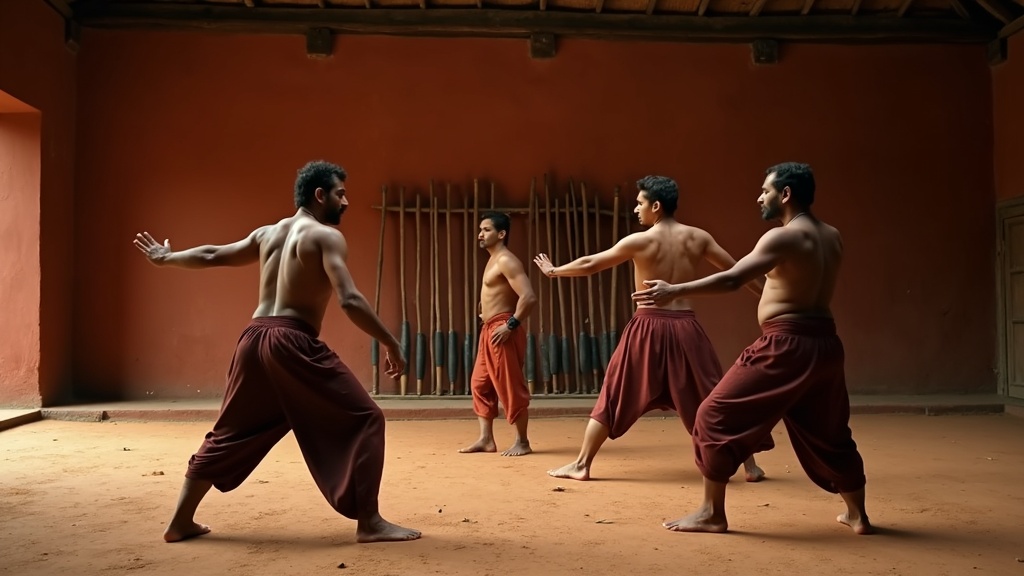
Kalaripayattu Training Fees — What It Actually Costs
Kalaripayattu Training Fees — What It Actually Costs
The hardest question to answer in this niche is also the most common one. People ask "how much does kalaripayattu training cost" and the open web answers with one school's price list, or a vague "depends on the program," or a number from 2014 that is no longer real. The actual answer depends on what you are buying, where in the world you are buying it, and how much of the teacher's attention is included in the price.
This guide is written from inside the practice, by a teacher who runs both online classes and residential immersions and has trained at village kalaris in Kerala where the monthly fee was a few hundred rupees. It maps every realistic format — local Indian classes, online subscriptions, retreats, residential programs, private one-to-one mentorship — with honest numbers in INR, USD and EUR. Where the range is wide, you will see why. Where there are hidden costs, they are named. Where one format is genuinely better value than another for a given situation, that is stated plainly.
Kalaripayattu training fees range from roughly ₹500 per month at a village kalari in Kerala to over €550 per month for one-to-one mentorship with an experienced international teacher. The honest middle for most students sits between $44 per month for a serious online membership and around €80 per day all-inclusive for a residential immersion in India. What you pay for is not floor time — it is the quality of the teacher's attention and the structure around the practice.
Key Takeaways
- Kalaripayattu training fees span roughly two orders of magnitude — from about ₹500 per month at a traditional village kalari in Kerala to €550 or more per month for private one-to-one mentorship abroad.
- A local class in Kerala typically costs between ₹500 and ₹3,000 per month, depending on the school's lineage, location, and student profile.
- Online kalaripayattu memberships sit between $20 and $50 per month for serious programs with live components; Kalari University's Level 1 online membership runs at $44 per month.
- A retreat or residential program in India costs between €1,500 and €3,500 for 10 to 17 days all-inclusive, depending on accommodation tier and inclusions.
- Private one-to-one mentorship with an experienced teacher runs from around €120 per single session to €297–€550 per month for ongoing programs.
- Hidden costs — flights, visa, oil, mat, training clothes, optional uzhichil — can add 10 to 40 percent on top of the headline retreat price.
- The cheapest legitimate fee is not the worst value, and the most expensive program is not always the best taught — match the format to your situation rather than to your budget.
- Many traditional kalaris in Kerala operate sliding scales for local students and serious foreigners alike; the printed fee is sometimes the starting point of a conversation, not the final number.
Why the Price Range Is So Wide
If you compare two kalaripayattu fees in isolation — say, ₹500 per month at a Kerala village kalari and €2,200 for a fifteen-day retreat in Tamil Nadu — the gap looks irrational. It is not. Five variables drive the spread, and once you can name them, every price list becomes legible.
Geography. A class in Kerala, the home of the practice, is priced for local students. The same training delivered in Berlin or New York carries Western rents, Western salaries and Western opportunity cost for the teacher. The same hour can cost twenty times more depending on the postcode.
Format. A group class at a kalari is not the same product as a curated retreat. The retreat bundles accommodation, three meals a day, transfers, often massage treatments, and the teacher's continuous attention. Per training hour the retreat is more expensive than the class — but you are not really buying training hours, you are buying the container around them.
Teacher seniority and lineage. A senior gurukkal — a recognised master teacher with decades of practice and a documented lineage — charges more than a junior instructor, and they should. The premium reflects the quality of the eye on your stance and the depth of the corrections you will receive. It is not always the same as production value of the website.
Group size and attention ratio. A group class with thirty students per teacher is structurally cheaper than a 1:1 session, and the attention per student is structurally lower. Most published kalaripayattu fees describe group class economics. Private mentorship pricing reflects a different mathematics — the teacher's hour, undivided.
What is bundled in. A monthly fee at a village kalari typically buys training and almost nothing else; an online membership buys video library, live sessions, and a community; a retreat buys lodging, food, transfers, and treatments. Two prices for "kalaripayattu training" can describe quite different products. The first move when comparing fees is to read the inclusions list carefully.
These five variables also explain why pricing for the same school can shift over time. A teacher who built their reputation on local classes for ₹1,000 per month may later run €2,000 retreats for foreigners without contradicting themselves. The audience changed; the price reflects what the new audience is actually buying.
Local Kalari Fees in India
The traditional starting point. A kalari in Kerala or Tamil Nadu, where local students train two to six times a week as part of their ordinary life, is the cheapest legitimate form of the practice in the world. It is also the form most foreigners never access without local introduction.
Typical monthly fees at a village kalari
For a local student in Kerala, monthly fees commonly sit between ₹500 and ₹3,000 (roughly $6 to $36, or €5 to €33). The lower end of this band is what a small village kalari charges children and teenagers training as part of community life; the upper end is closer to what a well-known urban kalari in Kochi or Thiruvananthapuram charges adults. Some schools take an annual fee instead of a monthly one — ₹6,000 to ₹15,000 for a full year of group classes is a common shape.
These prices buy two to six training sessions a week in a group, on the kalari floor, with the teacher (or a senior student) running the session. They do not typically include uzhichil oil massage, individual attention beyond what the group session allows, or the curriculum compression of a residential format. They are designed for sustainability over years, not for the intensity of a two-week trip.
Why these fees stay low
This needs naming, because the answer is not "Indians charge less because labour is cheap." Traditional kalaris in Kerala have always operated within a community-based economic logic. The kalari is part of the village. The teacher's children studied at the same kalari for the same fee. The senior students are also the assistant teachers, building up the next generation. The economic model is multi-generational and slow.
When a foreigner walks in with the question "how much for training," they are stepping into this logic from outside it. A serious teacher does not usually inflate the price purely because a Western student appears; what they may do is propose a different arrangement, because the question itself — short-term, intensive, foreign — describes a different product. This is part of why the residential and retreat formats exist as distinct categories.
Urban kalaris and foreigner-experienced schools
Some urban kalaris — particularly those that regularly host international students — quote higher monthly rates than village kalaris because they have built infrastructure around foreign attendance: English-language instruction, drop-in flexibility, online registration. Monthly fees in this category often sit between ₹3,000 and ₹8,000 (around $36 to $96, or €33 to €88). For a foreigner staying in India for one to three months who wants to attend a working kalari without committing to a packaged retreat, this is the realistic price band.
Comparison table — local kalari class formats
| Format | Typical monthly fee | Sessions per week | Audience |
|---|---|---|---|
| Village kalari, local students | ₹500–₹1,500 | 4–6 | Children, teens, local community |
| Urban kalari, local adults | ₹1,500–₹3,000 | 3–4 | Working adults in Kochi, Thiruvananthapuram, Bangalore |
| Foreigner-friendly urban kalari | ₹3,000–₹8,000 | 3–5 | International long-stay students |
| Private 1:1 with a senior teacher | ₹2,000–₹5,000 per session | as scheduled | Anyone, by arrangement |
If you want a more region-by-region map of where these schools sit and how to find one near you, the dedicated guide to finding a Kalaripayattu school near you lays out the geography properly.
A note on sliding scales
Many traditional kalaris operate informal sliding scales. A local family with limited income may pay less; a student showing serious long-term commitment may have their fee waived after the first months in exchange for helping with kalari maintenance or assisting newer students. None of this is published on a website. It exists because the kalari is not, in the traditional view, primarily a commercial enterprise. If you arrive with seriousness, patience and respect, the financial relationship may evolve in ways that no price list captures.
Online Training Costs
The newest tier in the kalaripayattu economy, and the one that has changed the accessibility math for everyone outside India. A serious online membership puts you in front of a recognised teacher for the cost of a streaming subscription.
What a serious online kalaripayattu membership costs
The honest range for a worthwhile online kalaripayattu program — meaning structured curriculum, video library, live components, and feedback channels — sits between $20 and $50 per month (roughly €18 to €45). Programs below this band are usually a small set of YouTube-style videos with no live element and no teacher contact. Programs above this band are typically premium hybrids that include private check-ins.
The format most online students choose:
- Video library with progressive curriculum, organised by stage and skill
- Live group sessions weekly or more often, where students train together on Zoom and the teacher gives real-time corrections
- Community access — a forum, a chat group, or a private channel — for questions between sessions
- Progress tracking so a student can see where they are in the curriculum
Kalari University's Level 1 membership
Kalari University's Level 1 online membership runs at $44 per month for ongoing access. The program includes a structured video curriculum, one live training session per week on Zoom (with three time-zone options so students from Europe, India, the Americas and Asia-Pacific can join), and direct access to the teaching team. The first lesson is free to anyone who creates an account — useful for finding out whether the practice and the pedagogy fit before committing to a subscription.
This pricing point reflects the international economics — Western-quality video production, multiple live sessions per week to serve global time zones, a dedicated team behind the platform. It is significantly more than a Kerala village kalari and significantly less than residential training, which is the correct economic position for the format.
Other online options
A handful of established Indian kalaris and individual teachers run online courses at various price points. Some are one-time purchases (a 20-hour video course for $99 to $200), others are subscription-based at lower price points than Western programs. Quality varies dramatically. The honest filters: who is teaching, can you see the teacher's own training credentials, is there any live component, and what happens if you have a question.
When online makes sense as a primary fee
Online training works well as a primary investment when:
- You have no local kalari and cannot travel to India in the near term
- You want to test whether the practice fits before committing to a flight
- You already have some movement background and can self-regulate the work
- Your goal is sustainable practice over years rather than concentrated change in weeks
Online training works less well when the goal is structural body change, which depends on continuous teacher attention and the felt presence of the kalari floor. For that, residential formats remain the gold standard, even at substantially higher absolute prices. The full case for online training, with its limits, lives in our online training guide.
Retreat and Intensive Program Costs
The category most international students will encounter first when they search. A retreat is a curated, time-bounded immersion — usually one to three weeks — that bundles training, accommodation, food and treatments into a single package. Price ranges are wider here than in any other format, and the inclusions list matters more than the headline number.
The three honest retreat tiers
Budget ashram tier — roughly ₹15,000 to ₹50,000 for a fortnight. This is the traditional Kerala kalari stay: basic accommodation, vegetarian food cooked at the school, twice-daily training, no production value around the edges. Communication may be partly in Malayalam. The cheapest legitimate route; the option with the most quality variance from school to school.
Curated international retreat tier — roughly €1,500 to €2,500 for 10–15 days all-inclusive. Better accommodation, structured English-language instruction, smaller groups, more attention per student. Run by teachers with significant experience teaching foreigners. The Kalari University retreat in Tiruvannamalai sits in this bracket — €1,800 for a shared room, €1,950 for a double, €2,200 for a single, for 15 training days from 1 to 17 August 2026, all-inclusive except international flights.
Hybrid wellness retreat tier — roughly €2,500 to €5,000 for 10–14 days. Bundles kalaripayattu with significant additional content — Ayurveda treatments, yoga sessions, philosophy modules, cultural excursions. Often run by retreat aggregators rather than kalari schools. The kalari training itself is typically two hours a day instead of four to six.
The full breakdown of which retreat tier fits which goal, with the regional differences across Kerala, Tamil Nadu and beyond, lives in our complete guide to a kalaripayattu retreat in India.
Residential programs — longer windows, lower per-day cost
For students who can take 21 days or longer, residential programs typically offer a lower per-day rate than two-week retreats. The standard ranges (all-inclusive of training, accommodation, meals and standard treatments):
| Duration | Indicative all-inclusive cost | Per-day equivalent |
|---|---|---|
| 7 days | €380 – €750 | €55 – €105 |
| 15 days | €700 – €1,400 | €45 – €95 |
| 30 days | €1,200 – €2,400 | €40 – €80 |
| 60 days | €2,200 – €4,400 | €35 – €75 |
| 90 days | €3,100 – €6,100 | €35 – €70 |
The per-day rate drops as duration extends because schools rebate the longer commitment. The trade-off is the calendar reality — three months away from ordinary life is not available to most working adults. The fuller picture, including how to choose a residential length that matches your situation, lives in our residential training program guide.
What is usually not in the retreat price
Read every inclusions list line by line. The following are almost never bundled in:
- International flights — €700 to €1,400 return from Europe or North America
- Indian tourist visa — €30 to €80 depending on country
- Travel insurance — €50 to €150 for two to three weeks
- Local transfers if not included — ₹3,000 to ₹8,000 from the nearest airport
- Kalari oil for home practice — €15 to €40 per bottle
- Additional uzhichil sessions beyond the included one or two — ₹1,500 to ₹4,000 per session
- Tips for kitchen and housekeeping staff — a small but real category in India
- Personal incidentals on rest days, taxis to local sights, phone data
A retreat quoted at €2,000 with another €600 in real travel costs is functionally a €2,600 commitment. Budget for the full picture, not the brochure number.
Private 1:1 Mentorship
The format that costs the most per hour and gives the most per hour. Private mentorship pricing is structurally different from group-class pricing because the variable is no longer floor time — it is the teacher's undivided attention.
Single-session pricing
For a one-off private session with a teacher at the senior end of the field, expect to pay between €80 and €150 per session in India and between €100 and €250 per session in Europe or North America. Kalari University offers a single taster session at €120, designed as an entry point for someone who wants to experience the work one-to-one before deciding whether to commit to a longer arrangement.
A single session is enough to assess whether the teacher and the practice fit; it is not enough to make structural progress. The pedagogy of the practice is built on continuity, and a single session is a beginning, not a programme.
Ongoing monthly mentorship
The realistic range for monthly 1:1 mentorship with an experienced international teacher sits between €297 and €550 per month, with the band reflecting how much teacher contact is included.
Kalari University's mentorship tiers, as a concrete reference:
- Practice Retainer — €89 per month. Self-directed practice with structured monthly check-ins; minimum infrastructure for serious students who already train daily.
- Group Retainer — €197 per month. Live group sessions with the teacher (maximum 8 participants), weekly cadence, plus the practice retainer scaffolding underneath.
- Personal Retainer — €297 per month. Group sessions plus a 1:1 monthly check-in with the teacher.
- 1:1 Mentorship — €550 per month. Full one-to-one work with the teacher; capped at five students at any time, because beyond five the teacher's attention starts to dilute.
These numbers are not unusual for the format; they are what continuous teacher attention from an experienced international teacher actually costs to deliver sustainably. They are also significantly higher than online membership, which is correct — they are different products.
When private mentorship makes economic sense
Private mentorship at this price point makes sense in three situations. First, when a student has done one or more retreats already and wants to translate the trip into year-round practice with the same teacher. Second, when an existing movement practitioner has hit a ceiling that group classes are not addressing, and wants direct feedback on the specific edge they cannot move past alone. Third, when geography or timing makes regular in-person training impossible and the alternative is no teacher at all.
It does not make economic sense as a first investment for someone exploring whether kalaripayattu fits them at all. For that, the free first lesson, a single taster session, or a serious online membership is the correct entry point — and significantly cheaper.
What's Usually Included vs Hidden Costs
The single largest source of pricing surprise is not the headline number — it is what was not in it. Every format has its own list of usual inclusions and its own list of items that sit just outside the price.
Group classes — typical inclusions and gaps
A monthly fee at a local kalari typically covers training sessions, access to the kalari floor, the teacher's time during scheduled sessions, and basic training oil for use on the floor. It does not usually cover individual uzhichil massage, weapons (which may come with their own fee or be purchased separately), training clothes, personal travel to and from the kalari, or any tutoring beyond the group session.
Online memberships — what's in, what's not
A serious online membership usually includes the video library, live group sessions per the program's schedule, community access, and progress tracking. It does not usually include private one-to-one feedback (unless explicitly stated), personal equipment, oil, mat, or printed materials. Some programs offer paid private sessions on top of the base subscription; clarify the price of those before assuming you can drop one in.
Retreats and residential programs — read the line items
This is the format where hidden costs hurt most, because a retreat is sold as "all-inclusive" and the assumption is that everything is covered. The honest line items:
- Training sessions — always included
- Accommodation in chosen tier — always included
- Three vegetarian meals per day — almost always included
- Drinking water and basic kitchen-level hydration — almost always included
- Kalari oil during training sessions — usually included in small amounts; larger quantities for home practice cost extra
- One or two introductory uzhichil sessions — sometimes included, sometimes a separate fee
- Additional uzhichil sessions — almost always a separate fee
- Airport pickup — sometimes included, sometimes a fixed extra
- International flights, visa, travel insurance — never included
- Personal incidentals, phone data, taxis on rest days — never included
- Excursions to nearby temples or sights — sometimes a programmed activity, sometimes an extra
- Training clothes — never included (most students bring their own)
- Tip jar at the end — culturally expected, never on the price list
A simple test: if the inclusions list on the school's site is one sentence ("all-inclusive"), email the school and ask for a line-item breakdown. A serious operator will send one. If you get vague language back, that is information.
Private mentorship — usually clean pricing
Of the four formats, private mentorship usually has the cleanest pricing — a monthly fee for a defined number of sessions, with extras (additional sessions, in-person time, travel costs if the teacher comes to you) priced clearly per item. The premium price point comes with the responsibility to be precise about what is included; serious mentorship offers are usually transparent.
Cost Comparison Table — Formats Side by Side
The single view of the kalaripayattu pricing landscape, with the four real formats compared on the variables that matter.
| Format | Typical fee | Hours per month | Scale of attention | Best fit |
|---|---|---|---|---|
| Local village kalari (Kerala) | ₹500–₹3,000 / month | 12–24 group hours | 1 teacher : 15–30 students | Local students, long-term sustainability |
| Urban / foreigner-friendly kalari | ₹3,000–₹8,000 / month | 12–20 group hours | 1 teacher : 8–20 students | Foreigners on long stays in India |
| Online membership | $20–$50 / month | 4–10 hours live + library | 1 teacher : group + recorded library | Anyone outside India, beginners testing fit |
| Retreat (10–15 days) | €1,500–€2,500 total | 60–90 hours intensive | 1 teacher : 8–20 students | First serious immersion, structural change in short window |
| Residential program (30 days) | €1,200–€2,400 total | 120–180 hours intensive | 1 teacher : 6–15 students | Sabbatical, deeper foundation, mature commitment |
| Group retainer (ongoing) | €89–€197 / month | 4–8 live hours | 1 teacher : up to 8 students | Year-round continuity with structured support |
| Personal retainer (ongoing) | €297 / month | 4–8 live hours + 1:1 check-in | 1 teacher : 1 student for check-in | Serious students wanting personal feedback monthly |
| Private 1:1 mentorship (ongoing) | €550 / month | 4 individual sessions | 1 teacher : 1 student | Direct edge-work, highest attention density |
(All prices indicative, in INR / USD / EUR roughly as of mid-2026; check the school's published rate at the time of booking.)
Two observations from this table matter more than the absolute numbers. First, the hours-per-month column shows that the intensive formats (retreat, residential) deliver more training time in a calendar month than a year of weekly classes — concentration is what you are buying. Second, the attention column shows that the structural difference between formats is not floor time but how many other students the teacher's eye is divided between in the same hour.
How to Think About Investment vs Cost
A short section, because this is the part where most pricing guides slip into hype. The plain version.
Cost is what you pay. Investment is what you can earn back from the work over time. Kalaripayattu, taken seriously, returns three things: a felt relationship with your own body that no amount of independent training will produce, a movement discipline you can sustain into older age, and (for some) a deepening engagement with a traditional practice that becomes part of how you organise your life. Whether those returns are worth a given fee is a personal calculation, not a marketing one.
The honest filters when sizing the investment:
Can you afford to do this without financial stress that compromises the work itself? A retreat that drains your savings will not deliver what a retreat that fits your budget delivers, because half your attention will be on the bank balance, not the floor.
Is this fee buying continuity or a single moment? A €2,000 retreat that is followed by no ongoing practice will give you a beautiful memory and very little durable change. A €197 monthly retainer that lasts two years will give you more change for less total money. Calculate the cost across the realistic time horizon, not the single moment.
Are you paying for the right scale of attention? A beginner does not need 1:1 mentorship at €550 a month; group classes will deliver the same value for a tenth of the price. An experienced student stuck at a specific edge may need exactly the 1:1 attention; group classes will not unlock what is stuck. Pay for the attention you actually need at this stage, not the highest-priced option available.
What is the cost of not doing this? This is the harder filter, and the only one that matters if the practice is the right one. If kalaripayattu, on honest reflection, is the work your body has been looking for, the cost of postponing it for years is not zero. Time is the currency that does not refund.
None of this argues for buying the most expensive option. It argues for buying the right option, sustained over enough time to actually deliver what the practice is built to deliver.
Frequently Asked Questions
How much does kalaripayattu training cost per month?
Monthly costs range from roughly ₹500 at a traditional village kalari in Kerala to $44 for a serious online membership like Kalari University's Level 1 program, to €197 for an ongoing group retainer with live sessions, to €550 for one-to-one private mentorship. The right monthly number depends entirely on the format, location, and scale of teacher attention. There is no single "kalaripayattu monthly fee" — there are four or five distinct products at very different price points.
Are kalaripayattu fees in India cheaper than in Europe or the United States?
Yes, significantly so for local-format training. A Kerala village kalari at ₹1,000 per month is roughly fifteen to thirty times cheaper per month than a comparable group class in a major Western city would be, if such a class existed. The pricing reflects local economics, not the value of the teaching. Online and retreat formats reduce the gap because they involve Western-scale infrastructure and travel costs.
What does a kalaripayattu retreat in India cost?
A kalaripayattu retreat in India typically costs between roughly ₹25,000 and ₹90,000 for a two-week budget-style residential stay at a traditional Kerala ashram, and between €1,500 and €2,500 for a 10–15 day curated international retreat with accommodation, meals and an experienced teacher included. The Kalari University retreat in Tiruvannamalai runs at €1,800 to €2,200 depending on room type, all-inclusive except flights, for 15 training days from 1 to 17 August 2026.
How much does it cost to learn kalaripayattu online?
A serious online kalaripayattu program with structured curriculum, live group sessions, and teacher contact typically costs between $20 and $50 per month. Kalari University's Level 1 online membership runs at $44 per month, with one live training session per week (three time-zone options) and the first lesson free. Programs below $20 are usually static video libraries; programs above $50 typically bundle private sessions on top of the base subscription.
What is the cost of private 1:1 kalaripayattu lessons?
A single private session with an experienced teacher costs between €80 and €150 per session in India and between €100 and €250 per session in Europe or North America. Ongoing monthly mentorship sits between €297 and €550 per month for international teachers. A single taster session with Kalari University runs at €120, and the full 1:1 mentorship program at €550 per month is capped at five students at any time.
Are kalaripayattu fees flat or sliding scale?
Both models exist. Traditional village kalaris in Kerala often operate informal sliding scales — local families with limited income may pay less, committed students may have fees waived after the first months. Foreigner-focused programs, online subscriptions, and Western-run retreats almost always charge flat published rates. If you are training in India long-term and demonstrate serious commitment, the financial relationship may evolve in ways no price list captures.
What hidden costs should I budget for in a kalaripayattu retreat?
Plan for international flights (€700–€1,400 return), Indian tourist visa (€30–€80), travel insurance (€50–€150), local transfers if not included (₹3,000–₹8,000), kalari oil for home practice (€15–€40 per bottle), additional uzhichil sessions beyond included ones (₹1,500–₹4,000 each), and modest tips for kitchen and housekeeping staff. A retreat quoted at €2,000 with another €600 of un-included extras is functionally a €2,600 commitment.
Why is there such a wide range in kalaripayattu training fees?
Five variables drive the spread: geography (Indian local pricing vs Western pricing), format (group class vs retreat vs 1:1), teacher seniority and lineage, group size and attention ratio, and what is bundled in. A village class at ₹500 and a curated retreat at €2,200 are not the same product — they describe different experiences sold at the prices their respective formats need to operate sustainably. Once these variables are named, every price list becomes legible.
Are there free options to start learning kalaripayattu?
Yes, though they are limited. Kalari University offers a free first lesson with account creation — useful for finding out whether the practice and the pedagogy fit before committing to a paid subscription. A number of teachers post foundational sequences on YouTube, which can be useful for orientation but are not a substitute for teacher feedback. Most serious progress in the practice requires at some point a teacher's eye on your stance, and that has a price.
Should I prioritise low cost or teacher quality when choosing a kalaripayattu program?
Teacher quality, with caveats. A poorly taught cheap program will leave you with bad habits that take longer to correct than they took to acquire. A well-taught expensive program that financially strains you will compromise the work itself. The honest target is the best teacher you can afford to study with sustainably — sustainably being the key word. A ten-year relationship with a competent teacher is more valuable than a single trip to a famous one.
Can I split kalaripayattu training between formats to save money?
Yes, and many serious students do. A common pattern: online membership year-round for continuity, one residential trip per year for depth, occasional 1:1 sessions for specific edges. Total annual cost for this composite is around $530 (online subscription) plus €1,800–€2,200 (annual retreat) plus €240–€600 (a few private sessions) — roughly €2,500 to €3,500 per year, which is less than a year of high-end mentorship alone and substantially more growth than any single format produces on its own.
Are kalaripayattu fees rising over time?
Slowly, in line with general inflation and Western-economy salary growth for international teachers. The bigger shifts are structural — the rise of online subscriptions has created a new tier between local Indian fees and Western-led retreat pricing. Local kalari fees in India have stayed remarkably stable over decades because the underlying economic logic of the village kalari has not changed. Western retreat prices have risen as the teacher pool has professionalised and infrastructure expectations have shifted.
Sources and Further Reading
- Kalaripayattu — Wikipedia — Foundational reference on the practice and the modern context in which fees are set.
- Kerala — Wikipedia — Geographic and cultural context for the heartland of low-cost local training.
- Indian martial arts — Wikipedia — Wider category and historical context for how the practice has been organised economically over time.
- Tiruvannamalai — Wikipedia — Setting for the curated international retreat referenced throughout the guide.
- Gurukula — Wikipedia — Traditional residential teaching model, which informs how training fees have historically been structured (or not structured) in this tradition.
- Kerala Tourism — Kalaripayattu — State tourism reference on traditional schools, useful for cross-checking regional context.
Conclusion — What to Pay For, and Why
A kalaripayattu training fee is not the price of floor time. It is the price of the form's continuity in your life — the teacher's attention, the structure that holds the practice, the calendar that makes return inevitable. A ₹500 monthly fee in Kerala buys decades of village kalari membership for someone whose life is already organised around that floor. A €2,200 retreat in Tiruvannamalai buys fifteen days of concentrated change for someone whose life is not yet organised that way and may never be. A $44 monthly online membership buys a structured, ongoing relationship to the practice that does not depend on geography. A €550 monthly mentorship buys the kind of one-to-one work that moves stuck edges no group setting can.
The right price for you is the one that lets you keep training sustainably with the kind of teacher attention your current stage actually needs. Cheaper is not better. More expensive is not better. Matched is better.
If you want to find out whether the practice itself fits before committing to any monthly fee, the first lesson at Kalari University is free with account creation — same teacher, same pedagogy, same curriculum, no card required. For the deeper economic question of which format suits which stage, the Kalaripayattu training pillar lays out the full path from first lesson to long-term practice, and the beginner's guide to kalaripayattu covers the realistic first month for anyone considering where to start.
About the Author
Raphael Gorschlüter — Co-Founder & Head Teacher, Kalari University
Raphael Gorschlüter is the co-founder of Kalari University and one of Europe's most experienced kalaripayattu teachers. He has trained for more than twelve years under teachers in Kerala and now teaches internationally — in Germany, Spain, and India — with a focus on developing the ability to feel movement, not just perform it. He runs Kalari University's online curriculum, the annual residential retreat in Tiruvannamalai, and a small one-to-one mentorship program.
