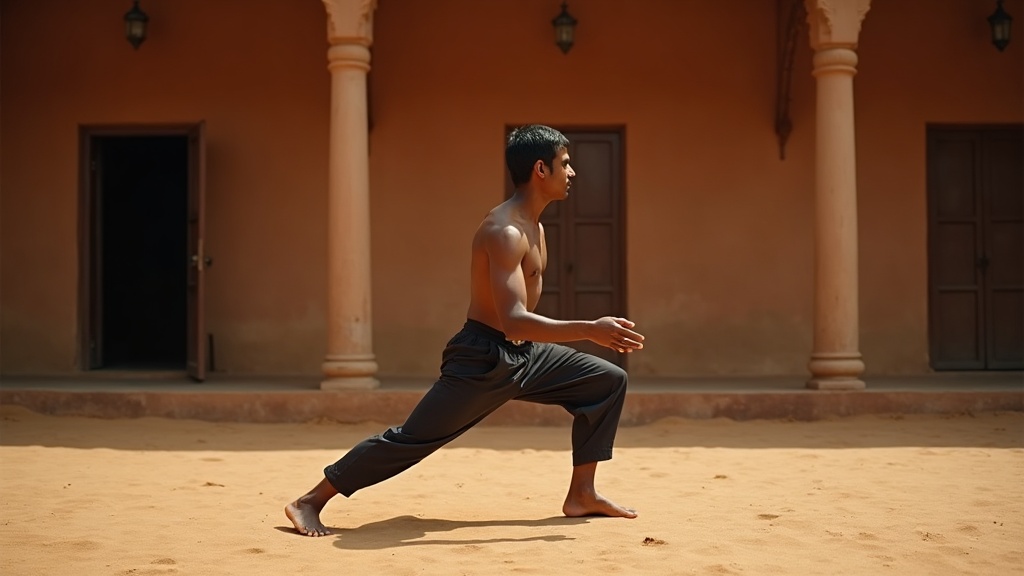
Body Awareness Movement Practice — The Complete Guide
Body Awareness Movement Practice — The Complete Guide
Most people who try to build body awareness already train — and that is exactly why it isn't working. You go to the gym. You run. Maybe you have done yoga for years, or you grew up in a martial art. You move plenty. And still, somewhere underneath all of it, the body feels distant. You can describe your workout in detail. You cannot describe what your left hip felt like in the third squat.
That gap is the entire subject of this guide. Body awareness is not a personality trait, an exercise to add to your warm-up, or a state you can think your way into. It is a trainable capacity — and the way you train it is through a daily body awareness movement practice: a small, repeating set of movements done slowly enough that you actually feel them, on a floor your body actually touches, for long enough that the nervous system stops treating sensation as noise.
This guide covers what a real practice looks like, why people who already train still don't feel their body, the three sensory systems involved, how to compare yoga, tai chi, somatic methods and traditional martial arts honestly, and how to build a daily ten-minute practice you will actually keep. By the end you should be able to choose a practice that fits your body, your day, and the gap you are trying to close.
Body awareness movement practice is a daily, repeating sequence of slow, deliberate movements done with attention to sensation rather than performance — designed to train the three perceptual channels (proprioception, interoception and felt sense) that make the moving body consciously perceivable. Unlike exercise, the practice's measurable goal is not strength, mobility or skill but the trainable capacity to feel what the body is doing while it does it.
Key Takeaways
- A body awareness movement practice is a daily, sensation-first sequence — not a list of one-off exercises — that trains proprioception, interoception and felt sense in motion.
- Most adults who already train still lack body awareness because their training rewards output (load, reps, technique) instead of perception (felt weight, breath, internal cues).
- The three trainable channels are proprioception (where you are in space), interoception (what is happening inside you), and felt sense (the embodied appraisal that integrates both).
- Ten minutes daily beats sixty minutes once a week — body awareness is built through repetition, not volume.
- Floor contact, slow weight transfer and breath-paired movement are the three universal mechanics shared by every effective body awareness method, from Feldenkrais to Kalaripayattu.
- The first felt shift typically lands within three to seven days of consistent daily practice; structural change in posture and habit usually takes six to twelve weeks.
- Yoga, tai chi, somatic methods and traditional martial arts each train body awareness differently — the right choice depends on what you already do and the specific gap you are trying to close.
- A body awareness practice is best chosen by matching three variables: how much time you have, how much sensation you currently can or cannot feel, and whether you train better alone or in a structured curriculum.
What Body Awareness Movement Practice Actually Means
The phrase gets used loosely. A gym coach saying "be aware of your body" during a deadlift is using it one way. A yoga teacher cueing you to "feel your sit bones" is using it another. A somatic therapist asking "where do you notice that in your body?" is using it a third. All three are pointing at the same underlying capacity, but none of them define it operationally.
So let me define it: a body awareness movement practice is a repeated, time-bound activity in which the explicit goal is to perceive — not perform — what the body is doing. The shape of the movement matters less than the fact that you slow it down enough to feel it, do it often enough for the nervous system to adapt, and structure it as practice rather than as exercise.
The distinction between practice and exercise is not semantic. Exercise has an external metric — weight lifted, distance covered, pose held. Practice has an internal metric — the clarity of sensation, the steadiness of breath, the precision of attention. You can do the same movement as exercise or as practice depending on which metric you privilege.
Body awareness vs mindfulness — the distinction
Mindfulness is a quality of attention. Body awareness is a perceptual capacity. The two overlap but they are not the same.
You can be mindful of your thoughts, your environment, your conversation, or your breath. Mindfulness as a category does not specify what you are aware of. Body awareness specifies the object: the physical, moving, sensing self. This is why a person can develop a long, serious mindfulness meditation practice and still report feeling disconnected from their body during movement. Sitting practice trains attention to the breath and the mental field; it does not directly train proprioception or the vestibular sense, because those systems come online primarily during movement.
A movement practice does the opposite: it trains body perception while the body is in motion, which is the condition under which most of your life actually happens. Standing up from a chair, walking through a doorway, reaching for a cup — all proprioceptive, all unconscious for most people. A body awareness practice slowly extends consciousness into these moments.
The three sensory systems
Modern neuroscience separates body sense into three sensory channels that work together. A complete practice trains all three.
Proprioception is the sense of where your body parts are in space without looking at them. Close your eyes, raise your arm to shoulder height, and try to make it exactly parallel to the floor — your proprioceptive system is what answers. The receptors live mostly in muscle spindles, tendons and joint capsules. They are highly trainable: dancers, martial artists and gymnasts have measurably sharper proprioception than the general population.
Interoception is the sense of what is happening inside your body — heart rate, breathing rhythm, gut activity, muscle tension, the warmth of a contracting fibre. The receptors live in the viscera and in afferent nerves running back to the brain's insular cortex. Interoception is what lets you know you are hungry, anxious or tired before you cognitively name it.
Vestibular sense is the perception of head position and motion, governed by the vestibular system in the inner ear. It tells you upright from tilted, accelerating from steady. It coordinates with vision and proprioception to keep balance and orientation.
Together, these three streams feed into what somatic practitioners call the felt sense — Eugene Gendlin's term for the integrated, pre-verbal appraisal of "how things are in the body right now." The felt sense is not a fourth sensory system; it is the synthesis of the first three plus the brain's interpretation. Training body awareness means training the three channels and the synthesis.
Why "practice" is different from "exercise"
A body awareness movement practice has four features that distinguish it from a workout:
-
Daily repetition. The same sequence done every day, not a varied routine. Repetition is what allows the nervous system to refine perception. A novel workout each day gives your muscles stimulus; the same movement repeated builds proprioceptive resolution.
-
Slow speed. Most awareness work happens at thirty to fifty percent of normal speed. Fast movement is dominated by motor programs running below consciousness. Slow movement gives the perceiving brain time to catch up.
-
Sensation as metric. You stop, not when the timer goes off, but when the quality of sensation drops. If you can no longer feel the foot pressure clearly, the practice for that day is done — regardless of duration.
-
No spectator. The practice is for the practitioner. There is no audience, no mirror, no leaderboard. Performance disappears as a structural variable, which is what allows perception to come forward.
If your "body awareness practice" looks like a workout — varied, fast, externally measured, performed — it is still a workout. It may be a good workout. It will not build the specific capacity we are discussing here.
Why You Can Train Hard and Still Feel Disconnected
This is the single most common message I get from new students at Kalari University: I train. I have been training for years. And I still feel like I'm running my body from the cockpit, not from inside it.
These are not unfit people. Most of them lift, run, climb, fight, cycle or practise yoga regularly. Some are athletes. The disconnect they are describing is not about deconditioning — it is about a different gap that volume of training cannot close.
Performing the movement vs feeling the movement
Almost all athletic training is selected for output. A squat is judged by depth, knee tracking, bar speed, weight. A yoga pose is judged by shape, alignment, hold time. A martial-arts technique is judged by clean execution at speed. These are all worth training. None of them require the trainee to feel what they are doing — only to do it correctly.
The dissociation is functional. The body can produce the right shape while the mind is somewhere else entirely. Watch a strong yoga practitioner think through their grocery list during a forty-five-minute flow; watch a competitive lifter run their cue checklist during a heavy single. The performance is excellent. The perception is hollow.
The cost of running thousands of repetitions this way is that the dissociation becomes the default. You stop expecting to feel anything during training, because for years the training has not asked you to. The disconnect compounds.
The cost: injury patterns, plateaus, motivation drift
Three things show up downstream of the disconnect:
Injury patterns. Most overuse injuries are signals the body sent that the mind didn't receive in time. The tight hip flexor that quietly recruited for the missing glute, the knee that started tracking inward two weeks before it hurt, the breath that shallowed before the panic in the third round of sparring — all knowable with awareness, all invisible without it.
Plateaus. Past a certain point, getting better at most disciplines requires finer control, not more output. The lifter who has plateaued at intermediate often plateaued because his fine motor recruitment is crude. The yoga student who has practised five years and stopped feeling depth is rarely flexible-limited — she is sensation-limited.
Motivation drift. Training that feels like nothing eventually becomes hard to show up for. People assume this is willpower failing. More often it is the nervous system saying: I am not getting paid for this work in any currency I recognise. The currency of body awareness is felt experience — and when that is absent, the basic intrinsic reward of moving is missing.
What changes when awareness comes online
When perception catches up with performance, three things shift, and they are noticeable within weeks:
You start finishing sessions feeling more, not less, settled. The training itself becomes regulating rather than depleting, because each rep is delivering sensory feedback the system can use to relax rather than data the system has to fight to keep up with.
You find the missing muscle. Practitioners who have struggled for years to "feel their glutes" or "find their lower belly" usually find both within a month of daily slow practice — not because of new strength but because perception has finally reached the territory.
You stop chasing the next variation. The boredom that drives most people from one program to another tends to fade. When each session is delivering new perceptual information, the same movement stays interesting indefinitely. This is why traditional practitioners can do the same basic sequence for decades and still report learning.
The Key Mechanics of a Body Awareness Practice
Across every method that genuinely builds body awareness — somatic schools like Feldenkrais and Body-Mind Centering, East Asian arts like tai chi and qigong, traditional Indian systems like yoga and Kalaripayattu — five mechanics keep recurring. They are the operative variables. Any practice that includes them works. Any practice that drops them stops working.
Floor contact and ground reaction
The single most underrated input in a body awareness practice is the floor. Most modern people spend almost no quality time in contact with the ground — they stand on it through shoes, sit above it on chairs, sleep on it through mattresses. The proprioceptive feedback from a bare foot, a bare shin, a bare palm against an actual surface is information the nervous system was designed to receive constantly and now receives rarely.
A practice that uses the floor — sitting, kneeling, low stances, hand-and-foot patterns — gives the body that input back. You feel where the weight is. You feel where it shifts. You feel where the contact is full and where it is partial. This is the basis of what people experience as grounding through movement — not a metaphor, a literal sensory input.
In Kalaripayattu, the early conditioning sequences (meypayattu) are practised on a packed-earth or stone floor for exactly this reason. The traditional kalari training pit is dug below ground level so that the air, the temperature and the floor all participate in the practice. You do not have to train in a clay pit to use this principle — a hardwood floor and bare feet are enough.
Slow movement and sequence
Speed is the enemy of perception. Below a certain pace, every movement is processed in real time; above it, motor programs take over and consciousness drops to the level of supervision. Most awareness practices operate at thirty to fifty percent of normal speed for a simple reason: that is the speed at which the brain can still feel what it is doing.
But slow isolated movement is only half the picture. The other half is sequence — a chain of slow movements that flow into each other, so awareness has to be sustained across transitions, not just held inside a single position. This is what tai chi forms train, what yoga's vinyasa principle attempts at slower speeds, what Kalaripayattu sequences build through linked stances and kicks.
Sequence matters because most real-world movement is sequenced. Standing up from a chair, walking into a room, lifting and carrying — none of these are isolated positions. Awareness that only exists inside a held shape does not generalise. Awareness built across transitions does.
Breath as the tether
The breath is the single thing the body is doing continuously, voluntarily-or-not, that the mind can choose to attend to at any moment. This is why every awareness tradition uses it as the anchor. In yoga, pranayama is the breath discipline. In tai chi and qigong, breath is matched to movement phases. In Kalaripayattu, breath organises the rhythm of long sequences.
The mechanic is simple: when attention drifts (and it will, repeatedly), return it to the breath. The breath becomes the rope you climb back to the body. Practitioners who develop a stable breath-attention relationship can re-anchor in seconds; practitioners without one drift for minutes before noticing.
A useful starting rule: breath through the nose, into the lower belly, paired with the movement so each phase of the movement has a clear inhale or exhale. The body does not care about the exact pattern. It cares that there is a pattern.
Felt sense over visual cue
In conventional training, visual cues dominate — you watch a video, copy a teacher, check a mirror. Visual feedback is fast and concrete, but it pulls attention to the outside of the body. Body awareness needs the opposite: attention inside the body, regardless of what it looks like from outside.
The shift is from "am I doing the shape correctly?" to "what does this position actually feel like?" The two are different questions and they recruit different brain areas. The first activates visual-motor cortex; the second activates the insula and somatosensory cortex.
A useful drill: do a familiar movement with eyes closed. Whatever it is — a squat, a downward dog, a tai chi step. Where does the felt sense get clearer, vaguer, surprising? That information is what was always available and what visual dominance was crowding out. This is the core practice for getting movement out of your head and back into the body where it is actually happening.
Proprioception under load
The last mechanic is the one most awareness-focused practices skip and most strength-focused practices over-do: training proprioception while the body is producing real force.
It is not enough to feel your foot pressure in a slow standing exercise. The interesting question — the one that determines whether your awareness transfers to your sport, your work, your life — is whether you can still feel that pressure when there is load, speed or contact. This is what distinguishes a martial-arts approach to body awareness from a purely meditative one. The traditional stages of Kalaripayattu explicitly add load progressively, precisely because proprioception that only exists at low intensity is fragile.
You do not need a martial art to train this. A heavy carry done slowly with full attention to breath, a single-leg balance with progressively more reach, a body-weight squat held at the bottom — all train proprioception under load. The point is not to suffer; it is to keep the perceptual signal open when intensity rises.
Movement Practices Compared — Which One Fits You
The question is not "which is best." The question is which method's strengths match the gap you are trying to close, and the limits you are willing to live with.
Yoga
Yoga's strength is breath-paired posture work. The basic mechanic — hold a shape, breathe into it, scan attention through the body — builds reliable static-shape awareness. After a year of consistent practice, most yoga students can clearly feel hip flexion, spinal rotation, shoulder external rotation in held positions. The interoceptive vocabulary is strong.
Where yoga commonly stops short for body awareness specifically: the shapes are mostly static, the floor contact pattern is narrow (hands and feet, rarely full body), and many modern styles run fast enough that the awareness window shrinks. A flow-yoga class moving through fifty postures in sixty minutes is excellent exercise; it is moderate awareness training at best.
Yoga fits you if: you like structure, you respond to detailed alignment cues, you want a method with millions of practitioners and a clear teacher landscape, and you are willing to sit through the more athletic styles' performance culture to find a teacher who emphasises breath and slowness.
Tai chi and qigong
These two related Chinese arts are arguably the world's most refined slow-movement traditions. The defining mechanic is continuous slow weight transfer across an unbroken sequence ("form"), paired with breath. Vestibular sense gets trained particularly well — the slow steps and turns require constant micro-balance.
Strengths: very gentle on joints, accessible at almost any age, the sequence-based structure builds sustained awareness across transitions in a way most yoga doesn't. The Harvard Medical School has published extensively on tai chi's measurable benefits, particularly for balance and stress markers.
Limits: the cultural and pedagogical landscape outside China can be thin. Many Western tai chi teachers learned from books or short workshops; finding a teacher with depth takes effort. The forms also take months to memorise before the felt practice can really start.
Tai chi fits you if: you want slow, sustained, sequenced practice, you respond well to long-arc skill building, and you have access to a good teacher.
Somatic movement and Feldenkrais
The somatic family — Feldenkrais, Body-Mind Centering, the Alexander Technique, Hanna Somatics, Continuum — sits closest to the therapeutic end of the spectrum. The defining mechanic is very small, very slow exploratory movement guided by attention to subtle internal cues, with the explicit goal of re-patterning unconscious habits.
Strengths: unmatched precision for re-learning specific patterns (chronic pain compensation, post-injury gait, breath-holding habits). For a deeper read on this category, the somatic movement practice guide covers the full landscape and how it overlaps with traditional movement systems.
Limits: somatic methods are not athletic — they will not build strength, endurance or capacity for high-intensity activity. For someone who already trains hard and wants the awareness piece added, somatic work is often best used alongside a more athletic practice, not as a replacement.
Somatic methods fit you if: you have a specific pattern you are trying to change, you are working with an injury or chronic tension, or you want the most refined attention training available.
Traditional martial arts (Kalaripayattu as a worked example)
Traditional Asian martial arts are an underused option in the body awareness conversation, mostly because they are read as "fighting" rather than as movement systems. The defining mechanic of arts like Kalaripayattu, traditional Indian martial arts, or pre-sport karate is a progressive system of body conditioning sequences (meypayattu, kata, taolu) that build awareness through repetition before any combative application is added.
Kalaripayattu is a good worked example because the awareness training is structurally foregrounded. The first stage, meithari, is months to years of low stances, slow kicks, animal-shape sequences and floor work, practised barefoot on a packed-earth or stone floor. Strikes and weapons only enter once the body is genuinely capable of carrying them. The whole system was designed by people who needed bodies that could feel themselves under combat stress, which is the strictest possible test of awareness under load. The full picture of what changes in the body through this practice covers the specific shifts this approach produces.
Strengths: floor contact built into every session, sustained sequences, breath paired with movement, progressive load. Awareness is trained inside actual motion rather than alongside it.
Limits: harder to find good teachers outside India and small European hubs. Some lineages still emphasise the combative endpoint over the awareness pedagogy. Look for teachers who can articulate why the conditioning matters, not only how to strike.
Kalaripayattu and similar traditional arts fit you if: you already train athletically, you want awareness that survives load and speed, and you want a long-arc practice with depth still available decades in. Embodiment training for men covers this fit specifically for the male athlete already frustrated that his existing training isn't landing.
A decision frame
Three questions to choose:
How much time do you have per day, reliably? If under fifteen minutes, somatic or short Kalaripayattu sequences fit. If twenty to forty, yoga or tai chi work well. If you can dedicate an hour, almost any system delivers.
Are you starting from low or high body awareness? If you genuinely cannot feel basic things (weight in the feet, breath in the belly), start with somatic work or a beginner-oriented body awareness for beginners approach. If you already train and can feel basics but want depth, traditional martial arts or longer tai chi forms will reward you more.
Do you train better alone or in structure? Somatic and yoga have huge solo libraries — Feldenkrais audio lessons, yoga apps, videos. Tai chi and martial arts traditionally need a teacher for the form, then can be practised solo. Choose accordingly.
Building a Daily Body Awareness Practice
The single most important variable in body awareness training is not which method you choose. It is whether you actually do it daily.
A mediocre method done every day will out-perform a great method done twice a week. The nervous system calibrates to what it sees regularly. Two practices a week is novelty input; seven is the new normal. So the design constraint for your first daily practice is the same as for any new habit: short enough to actually happen, structured enough to feel like practice not random movement, embedded into the day reliably.
Start with five to ten minutes
For the first two weeks, the practice should be no longer than ten minutes. Most people will protest this — "I have more time than that." The point is not the time budget; it is the floor of consistency. If you can do ten minutes for fourteen days in a row, you can do anything from there. If you cannot, you will not stick with twenty minutes either.
A simple starter sequence:
- Stand barefoot on a hard floor for one minute. Eyes closed. Feel where the weight sits — front foot, back foot, big toe, heel. Don't change it; just notice.
- Slow weight transfer side to side for two minutes. Move at one-quarter normal walking speed. Breathe through the nose, paired with the shift.
- Slow forward bend and return for two minutes. Half normal speed, eyes open or closed. Pay attention to where the breath goes and where it stops.
- Low squat hold (as low as your hips allow) for two minutes. Breathe into the lower belly. Let the head be heavy.
- Final standing pause for one minute. Eyes closed. Notice what is different in the body now versus when you began.
Ten minutes. That is a complete daily practice. Done seven days a week for two weeks, it will produce a felt shift in almost every adult.
A week of progression — what should shift
Here is what the felt arc tends to look like in the first seven days:
Day 1: Mostly mental. You will be thinking about whether you are doing it right, whether the sequence is too short, what your body is supposed to be feeling. This is normal. Don't try to fix it; just complete the sequence.
Day 2-3: The first felt shift usually shows up here — typically clearer foot pressure or a quieter mind during the squat hold. The shift is small. It is the entire point.
Day 4-5: Breath starts to deepen on its own during the slow transfer phase. You will probably catch yourself looking forward to the practice rather than dreading it.
Day 6-7: Awareness during practice begins leaking into the rest of the day. You will notice yourself standing differently while waiting in line, breathing into the belly while at the computer. This is the practice generalising. It is the real outcome you are after.
If by day seven nothing has shifted — and this is rare but possible — examine whether you are actually doing it slowly enough, whether the eyes are actually closed where the sequence asks for it, and whether you are practising at the same time daily rather than scattered through the week.
How to know it's working (and how to know it isn't)
Three signs the practice is working:
- You can feel sensations during practice you couldn't feel a week ago — specific places, specific qualities, not vague general "feeling more"
- Outside-of-practice moments feel different — standing, walking, sitting down all carry a thin layer of body awareness they didn't carry before
- You find yourself returning to breath and ground throughout the day without trying
Three signs something is off:
- The practice consistently feels like effort, like a workout, like something you are pushing through — you are likely going too fast or too long
- You can't remember what you felt five minutes after finishing — attention was not actually inside the body during practice
- You're already varying the sequence — variation kills repetition, which kills the calibration
For men who already train
A specific note for the embodiment training for men audience: if you already lift, fight, climb or play sport at a decent level, your trap is treating body awareness as another training stimulus to add on top.
It isn't. It is a parallel practice with a different goal. Adding ten minutes of slow ground-contact work before or after your normal session does not increase your training load — it adds a perceptual layer that makes the rest of your training land differently. Most male athletes who add this report feeling like their existing training is suddenly delivering more, even though they are doing the same volume.
Common Mistakes That Stall a Practice
The same handful of patterns kill most attempts at body awareness practice. They are all easy to avoid once named.
Treating it as another workout. The most common mistake. The practice has to be slower and shorter than your fitness training, not equally intense. If you finish your ten-minute practice breathing hard, you went too fast or pushed too low. Re-set tomorrow.
Skipping breath. Without breath as an anchor, attention drifts within seconds and you spend the practice mentally rehearsing your day. The breath is not optional — it is the operative variable.
Chasing sensation. Beginners often want big, dramatic felt experiences. Real practice produces small, quiet ones. If you are forcing depth in a stretch or driving into a stance to "feel more," you have re-introduced performance and lost the perceptual goal.
Expecting fast results. The first felt shift usually lands within a week. Structural change in posture, breath patterns and habitual tension typically takes six to twelve weeks of daily practice. Anyone selling faster than that is selling something else.
Skipping days because you are busy. This is the practice-killer. Two days off and the calibration starts to fade. Five days off and you are starting again. Better to do two minutes on the bad day than to skip — the daily-ness is the whole mechanism.
Mixing methods too early. Picking a method and staying with it for at least eight weeks before adding anything else gives the practice a chance to consolidate. Practitioners who hop between yoga, somatic and tai chi videos every other day rarely build the foundation any of them would have given.
Frequently Asked Questions
What is a body awareness movement practice?
A body awareness movement practice is a repeated, daily set of slow, deliberate movements designed to train proprioception, interoception and felt sense — the three sensory channels that make movement consciously perceivable. Unlike a workout, the goal is not load, output or skill acquisition but the ability to feel what the body is doing while it does it. Done daily for ten minutes, it builds a measurable perceptual capacity within weeks.
How long does it take to feel results from a body awareness practice?
Most adults notice the first felt shift within three to seven days of daily ten-minute practice. The shift is small at first — clearer foot pressure, a quieter mind during movement, sharper breath awareness. Structural change in posture and movement habits typically takes six to twelve weeks of consistent practice. Deep change — the kind that affects how you move through your entire day — usually emerges over six months to two years of daily-ish practice.
Can I build body awareness at home without a teacher?
Yes for the foundation. Slow weight transfer, breath-paired floor contact, body scans and basic standing work are all safe to do alone with video guidance. A teacher becomes important when you move into loaded patterns, fast sequences, weapons work or therapeutic re-patterning where alignment errors compound. The honest answer: start solo, get the daily habit established, add a teacher for depth once you know you will stick with it.
How is body awareness different from mindfulness?
Mindfulness is a quality of attention you can apply to anything — thoughts, breath, environment, dishes. Body awareness is specifically the trained perception of your physical self in space and time. The two reinforce each other but are not interchangeable. A long mindfulness meditation practice does not guarantee strong body awareness, because sitting practice trains attention to the breath and mental field; it does not directly train proprioception or the vestibular sense in motion.
What is the difference between proprioception and interoception?
Proprioception is the sense of where your body parts are in space — your foot's angle, your shoulder's height, your spine's curve. Interoception is the sense of what is happening inside your body — heart rate, breath, hunger, muscle tension, the heat in a contracting fibre. They are distinct sensory channels with different receptors and different cortical processing. A complete body awareness practice trains both, plus the vestibular sense and the integration of all three into felt sense.
Which movement practice is best for body awareness — yoga, tai chi, or martial arts?
None is universally best. Yoga excels at static-shape awareness and breath. Tai chi and qigong train slow weight transfer and vestibular sense. Somatic methods like Feldenkrais are unmatched for subtle re-patterning. Traditional martial arts like Kalaripayattu build awareness under increasing speed and load. The right choice depends on what you already do, what gap you are trying to close, and what teaching is available where you live.
Why do I feel disconnected from my body even though I train?
Training output and training awareness are different skills. Most gym, sport and even yoga training rewards executing a movement correctly — hitting a position, lifting a weight, completing a flow. That builds performance, not perception. Without slow, deliberate sensation-first work done daily, the body becomes more skilled while the felt connection to it stays shallow. The fix is not more training; it is parallel awareness practice.
What does grounded actually mean in a movement context?
Grounded means three things at once: weight you can clearly feel through the soles of your feet, a breath that reaches the lower belly without effort, and attention that stays in the body rather than darting ahead to the next thing. It is not a vibe — it is a measurable felt state you can train through ground-contact movement. Most Kalari University students describe arriving at "grounded" within four to eight weeks of daily floor-contact practice.
Is a body scan enough as a daily practice?
A body scan is a useful entry point — five minutes of attention sweeping through the body builds basic interoception. But scanning is static, and the awareness that builds in stillness does not automatically carry into how you move through your day. To carry awareness into how you actually live, sit, walk, train and work, the practice has to include movement, so the perception becomes available in motion, not only in lying-down stillness.
How much time per day do I need for a body awareness practice?
Ten minutes daily beats sixty minutes once a week for body awareness, because perception is built by repetition and the nervous system's daily re-calibration. Five to ten minutes is enough to start. Twenty to thirty minutes is a sweet spot for established practitioners. The non-negotiable variable is daily-ness, not duration — five minutes seven days a week will outperform an hour once a week, every time.
Do I need to be flexible or strong to start a body awareness practice?
No. Flexibility and strength are outcomes of consistent movement, not prerequisites for awareness. In fact, very strong and very flexible people often have weaker proprioception than average — their range of motion hides their lack of fine control. The practice meets you where your body is and builds sensation first. From sensation, alignment improves; from alignment, strength and mobility develop naturally as side-effects.
Can a body awareness practice help with anxiety or stress?
Slow, breath-paired movement is one of the most studied entry points into parasympathetic nervous system activation, which is the physiological basis of feeling calmer. Research on contemplative movement consistently reports reductions in self-reported stress and improvements in interoceptive accuracy. We do not make medical or therapeutic claims here — but the experience most practitioners describe (a quieter mind, a more settled body) is consistent with what the research keeps finding.
Sources & Further Reading
- Proprioception — Cleveland Clinic — clinical definition and clinical relevance of the position sense
- Interoception — Cleveland Clinic — clinical definition of the internal-state sense and its role in emotion and self-perception
- Somatics — Wikipedia — overview of the field, including Hanna, Feldenkrais and Alexander lineages
- Feldenkrais Method — Wikipedia — history and method of the most established somatic movement school
- Body-Mind Centering — Wikipedia — Bonnie Bainbridge Cohen's somatic movement and developmental movement framework
- Embodied cognition — Wikipedia — the cognitive-science background for why moving the body changes thinking
- Polyvagal theory — Wikipedia — Stephen Porges's framework linking autonomic nervous system states to behaviour and felt experience
- Vestibular system — Wikipedia — anatomy and function of the balance and orientation sense
- Insular cortex — Wikipedia — the brain region most associated with interoceptive processing
- The health benefits of tai chi — Harvard Health Publishing — evidence summary on tai chi's measurable effects on balance, stress and cardiovascular markers
- Interoception, contemplative practice, and health — PMC — peer-reviewed review of interoception's role in contemplative and movement practice
- The neurobiology of interoception in health and disease — PMC — comprehensive neuroscience review of interoceptive systems
- Kalaripayattu — Wikipedia — overview of the traditional Indian martial art used as the worked example throughout this guide
- Indian martial arts — Wikipedia — the broader tradition Kalaripayattu sits inside
Conclusion — Where to Start Today
Body awareness is not a thing you can read your way into. It is a perceptual capacity built by doing — slowly, daily, with the body actually on the floor and the attention actually inside it. Everything in this guide can be reduced to three operative principles: practice over exercise, felt over performed, daily over occasional. The method matters less than the discipline.
If you take one thing from this guide, take this: try the ten-minute starter sequence in the building section every day this week. Don't add anything to it. Don't vary it. Just complete it seven days in a row and notice on day seven what is different from day one. That single experiment will tell you more about your body and about this kind of practice than another two thousand words of reading.
If you want a structured place to start that already has the slowness, the floor contact, the breath pairing and the daily structure built in: the 7-day course walks you through one foundational Kalaripayattu movement per day, designed for exactly the situation this guide describes — someone who already trains but is not feeling it land. Seven days, ten to fifteen minutes each, you will feel the difference by day three. [Start the 7-day course →]
Until the 7-day course URL is live: the free first lesson is the lowest-stakes way to experience this approach — no payment, no commitment, no equipment. Create your account and start today →
For readers who want to keep going deeper into specific aspects of this topic, the cluster spokes go deep on each piece: somatic movement practice for the therapeutic and re-patterning lens, grounding through movement for the felt state most students describe as the first concrete outcome, embodiment training for men for the male-athlete fit specifically, movement out of your head for the cognitive-disconnect problem, and proprioception in martial arts for the under-load piece that most awareness practices skip. For the broader landscape of how this practice fits with structured training, the planned kalaripayattu training online guide covers what transfers through a screen and what doesn't. For practitioners thinking about immersive deepening, the planned Kalaripayattu retreat in India guide covers what a residential practice adds that daily home work cannot.
About the Author
Raphael Gorschlüter — Co-Founder & Head Teacher, Kalari University
Raphael has twelve years of Kalaripayattu training and teaching. He trained in Kerala under lineage teachers, has taught extensively in Germany, Spain and India, and is the co-founder of Kalari University, an international online and retreat platform. His teaching emphasis is the same as the throughline of this guide: developing the ability to feel movement, not only perform it. He leads the annual "From Mind to Body" retreat in Tiruvannamalai, Tamil Nadu.
Last updated: 2026-05-27
